Tag: Stress Management

  • Daily Stress in the Life of a Man

    Stress in Man's LIfe AG.OG..SunoG...

    Daily Stress in the Life of a Man

    Introduction

    Stress is inevitable, we all know. It’s with everyone, be it a man or a woman, a couple or even a kid. Everyone has their own set of problems stressing them out on day to day basis.

    Here we discuss stress in a man’s life. The society demands that a man be strong, stable, and dependable, leaving no room for emotional expression or breakdown. Stress here becomes a constant companion that nobody thinks or talks about, and it often goes unnoticed.


    Sources of Stress

    There may be several sources of stress in a man’s life. Here, we try to name a few common sources

    1. Financial stress

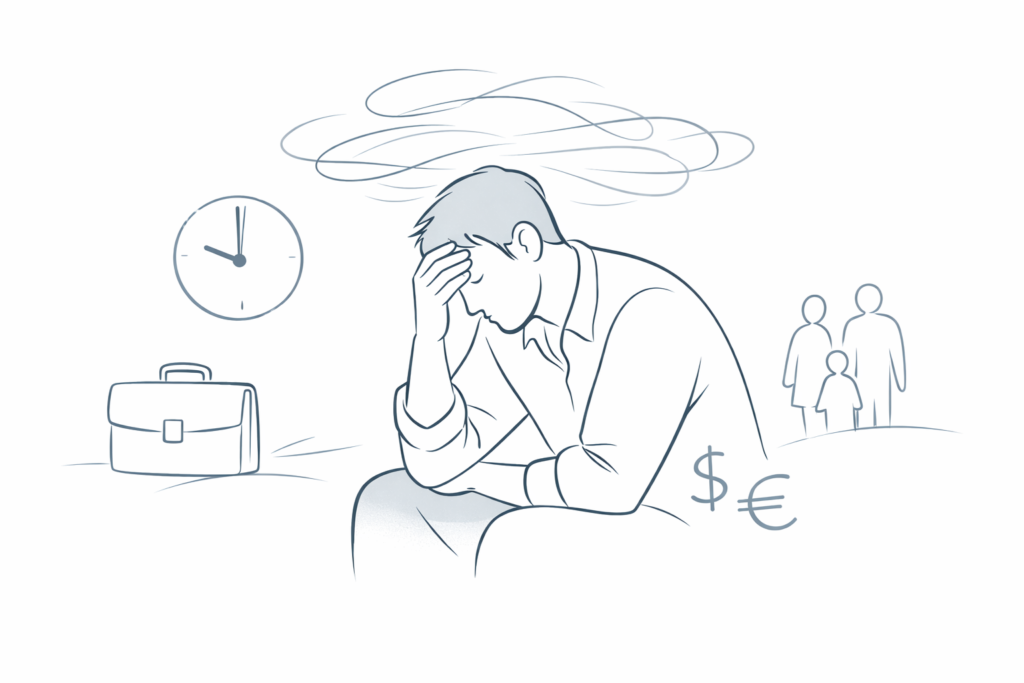
    The most common reason for stress in a man’s life is the financial responsibilities of a man. The role of being a provider, the stress of keeping up with the social expectations, job security, keeping up with inflation, and career growth keep men preoccupied, inevitably in their minds.

    2. Work stress

    Society often judges a man by his success and achievements. The long working hours to prove himself at the workplace, the performance pressure, the peer competition and the fear of failure burn out a man’s peace of mind.

    3. Emotional Suppression

    Men, since birth, are taught to be strong and not to cry. And they are even sometimes trolled if seen crying, being said to be crying like a girl. They try to make men tough without realizing its human to have emotions. With all this, the emotions are simply suppressed, piling up, bringing in frustration.

    4. Relationship Stress

    Multiple roles played by man in different relationships, like being a good son, a good husband, a good friend, a good partner, a good father brings in stress for fear of not being able to prove himself in some role.

    5. Social cause

    Men also often have to take a lead as a mediator to bring peace and harmony in a relationship by bridging two individuals, sometimes even without any reason or emotional support. The added burden for a good social cause is sometimes a stress in a busy life schedule.
    Fear of failure or failing to meet these ideals creates self-doubt and internal conflict.

    6. Lack of Personal Time or Me time

    Continuous work and no rest, changing roles between work, family, society, a man sometimes gets emotionally and physically overburdened and exhausted with work, and that leads to no self-time.


    Common changes stress brings around in men

    Stress is a silent partner, and often the effects of stress are not seen in words but can be observed in the person’s behaviour. Very frequently, the effects go unnoticed in daily life. And small changes over time have to be evaluated very carefully. Some of the most common changes that can be observed are:

    1. Irritability and anger

    An otherwise happy person who is burned out by the stress starts getting irritated by small things in daily life, and if the things or conditions get worse, then anger takes over.

    2. Emotional withdrawal

    A person who is full on the inside becomes emotionally unstable and starts feeling isolated from loved ones or society.

    3. Sleep issues

    The mind is never at rest, and overwork by the mind with continuous thoughts running in one’s mind about the things going around him makes things work not only when the person is awake but even when he tries to sleep, depriving the person of his sleep, which further deteriorates the conditions.

    4. Anxiety and low motivation

    Continuous thoughts and overthinking keep the mind preoccupied and anxious. Resulting in a lack of focus and failure in the completion of work. Which in return de motivates the person, bringing things to a further low.

    5. Feeling unappreciated or misunderstood

    A negative pattern, once started, aligns the things to negativity overall. A person who is unable to justify his results or is unable to perform his duties will be judged a failure. The society or loved ones often overlook the reasons for failure but misunderstand the person concerned, and the person may feel devalued or unappreciated, ultimately moving into depression.

    Things here start going in a vicious circle where the aftereffects of stress become the stepping stone to further stress.


    Stress management

    Stress management is often not so easy, as the main cause of stress is hidden and cannot be easily judged by anyone. Still, if a proper procedure is followed, we may help an individual to lead a better life by overcoming stress.

    1. Acknowledge the stress

    To identify the same, you need to first accept the stress. It is not an act of weakness but an act of courage to accept stress.

    2. Proper and open communication

    Communication plays its own role in stress reduction. An open heart communication without any judgment with a trusted person or a professional helps in releasing the inner frustration and a possible suggestion to fight back.

    3. Physical activity and movement

    Physical body movement plays an important role in stress reduction. The body, in response to physical activity, releases endorphins that relieve the person of stress. Physical movement also helps in reducing stress hormones.

    4. Realistic expectations

    By putting up small goals with realistic expectations and achieving success with these small goals, a person becomes more confident to gradually fight back against bigger and difficult scenarios.


    Conclusion

    Daily stress in a man’s life is real, layered, and deeply emotional and the majority of the time it’s invisible. Recognising this stress is the first step toward healthier relationships, better emotional balance, and personal growth.

    Men don’t need to carry everything alone; strength also lies in awareness and openness.
  • Stress

    Sress AG.OG..SunoG...

    Stress: Understanding the Silent Pressure of Everyday Life

    Introduction

    In today’s fast-moving and highly competitive world that constantly values productivity, achievement, and perfection, stress has become almost inevitable. Knowingly or unknowingly, stress has turned into a constant companion—quietly weaving itself into our daily responsibilities, expectations, and unspoken emotions.

    Stress is rarely loud. In fact, a certain amount of stress is natural and even necessary for day-to-day functioning. It helps us stay alert, motivated, and responsive. The real problem begins when stress becomes chronic or remains unmanaged. Over time, it slowly erodes our mental, emotional, and physical well-being.

    Understanding stress is not a luxury—it is essential for healthier living, emotional balance, and stronger relationships.


    What Is Stress?

    Stress is the body’s natural response to situations that demand attention, effort, or adaptation. It is a reflex mechanism designed to protect us.

    Whenever the body perceives a threat or challenge, it releases stress hormones—primarily cortisol and adrenaline—that prepare us to react quickly. This physiological reaction is medically known as the “fight or flight” response.

    In short bursts, this response is helpful. However, when the body remains in this heightened state for prolonged periods, stress starts causing harm instead of protection.


    The Pros and Cons of Stress

    Stress is not entirely negative. In fact, it has both positive and negative aspects.

    Positive Effects of Stress

    • Sharpens focus and alertness
    • Boosts energy levels
    • Encourages problem-solving
    • Helps meet deadlines
    • Motivates action during challenges

    Negative Effects of Stress

    When stress becomes prolonged or unmanaged, it stops being beneficial and begins to impact overall health and quality of life—mentally, emotionally, and physically.


    Common Sources of Stress in Daily Life

    Stress often follows us from the moment we wake up until we finally fall asleep. Every phase of the day carries its own pressures.

    1. Work and Career Pressure

    Time-bound office schedules, job insecurity, performance expectations, long working hours, meeting deadlines, and constant evaluations contribute significantly to stress.
    The situation worsens due to technology, where accessibility and connectivity have become a 24×7 expectation, making it difficult to truly disconnect. Over time, this leads to burnout and emotional exhaustion.

    2. Relationships and Family Responsibilities

    Every relationship—between parents and children, partners, spouses, friends, or peers—requires time, effort, and emotional presence.
    Lack of communication, misunderstandings, emotional distance, unmet expectations, parenting challenges, and caregiving responsibilities can create immense emotional pressure. Balancing relationships often becomes mentally draining and stressful.

    3. Financial Stress

    Bills, loans, family expenses, savings, rising living costs, and uncertainty about the future keep the mind constantly engaged. Financial stress affects sleep, emotional stability, decision-making, and even personal relationships. It is one of the most common stressors in adult life.

    4. Health and Lifestyle Factors

    Persistent work routines combined with family and social responsibilities leave little time for self-care. This often leads to poor sleep, irregular eating habits, reduced physical activity, increased screen time, and emotional fatigue—creating a continuous cycle of stress.

    5. Social and Emotional Pressure

    The pressure to appear strong, social media influence, fear of judgment, and fear of failure often lead people to suppress their emotions. Suppressed emotions don’t disappear; they accumulate over time and eventually manifest as chronic stress, anxiety, irritability, or emotional breakdowns.


    How Stress Affects the Body and Mind

    Unmanaged or chronic stress can seriously impact overall health, making early recognition and management crucial.

    Effects of Stress on Physical Health

    • Constant fatigue
    • Sleep disturbances
    • Headaches and body aches
    • Lowered immunity
    • Digestive issues such as acidity or irritable bowel symptoms
    • High blood pressure
    • Heart-related concerns

    Effects of Stress on Emotional and Mental Health

    • Anxiety
    • Overthinking
    • Irritability
    • Mood swings
    • Difficulty concentrating
    • Difficulty making decisions
    • Feelings of helplessness or hopelessness
    • Loss of motivation or interest
    • Depression in prolonged cases

    Effects of Stress on Relationships

    • Behavioral changes
    • Short-tempered reactions
    • Emotional withdrawal
    • Miscommunication
    • Frequent conflicts

    Stress often speaks through behavior rather than words.


    Why Stress Often Goes Unnoticed

    Stress is silent and frequently normalized through thoughts like:

    • “Everyone is stressed.”
    • “This is just how life is.”
    • “I’ll deal with it later.”
    • “It’s normal to feel this way.”

    Over time, living under constant pressure becomes routine. When stress becomes familiar, it stops being recognized—until it begins to damage health and relationships.


    Practical Ways to Manage Everyday Stress

    Acceptance is the first step toward managing stress. Small, consistent efforts done with intention can create a significant positive impact.

    1. Acknowledge Stress

    Acceptance is not a sign of weakness; it is an act of self-awareness. Recognizing stress lays the foundation for effective management.

    2. Express Yourself

    Expressing emotions—through talking, writing, or creative activities—helps release emotional burden and reduces stress buildup.

    3. Set Healthy Boundaries

    Setting boundaries may feel uncomfortable initially, but in the long run, it protects emotional well-being. Learning to say “no” is an essential life skill.

    4. Prioritize Self-Love

    Rest, self-care, and personal time are not indulgences; they are necessities. They help restore emotional and physical energy.

    5. Build Healthy Relationships

    Having at least one safe space where emotions can be expressed without judgment acts as a powerful stress buffer. Feeling understood and supported significantly reduces stress.

    6. Prioritize Tasks

    Start with small, manageable steps. Completing simpler tasks builds confidence and motivation to tackle bigger challenges.

    7. Practice Gratitude and Mindfulness

    Gratitude and mindfulness help calm the mind, reduce mental clutter, and create emotional balance.

    8. Stay Physically Active

    Physical activity, yoga, meditation, or exercise triggers the release of endorphins, which naturally counter stress hormones.

    9. Maintain a Balanced Lifestyle

    Nutritious food, proper hydration, reduced caffeine intake, adequate sleep, and mindful digital consumption play a major role in emotional stability.

    10. Seek Professional Help When Needed

    When stress begins to interfere with daily functioning, relationships, or health, seeking professional support is a wise and responsible step.


    Conclusion

    Stress is never loud, and most of the time, it goes unnoticed or ignored. Yet the reality is that stress is inevitable. What truly matters is how early we listen to it and respond.

    By acknowledging stress instead of suppressing it, we move closer to healing, resilience, and inner peace. The sooner stress is addressed, the easier it becomes to manage. Ignoring it during the initial stages can lead to chronic stress, anxiety disorders, depression, and serious physical illnesses.

    Listening to stress is not weakness—it is self-care.

  • Meditation and Mindfulness Practices That Actually Work for Men

    stress relief men AG.OG..SunoG...

    Meditation and Mindfulness Practices That Actually Work for Men

    Introduction

    In today’s fast-paced world, competition, stress, and emotional fatigue have become extremely common. Many people—especially men—carry an invisible load of personal and professional responsibilities that takes a severe toll on their physical and emotional health.

    Meditation and mindfulness are proven practices for improving emotional wellbeing, but interestingly, men often hesitate to begin or stick to these practices. This blog explains why—and offers practical, simple techniques that actually work for men.


    How and Why Meditation Matters

    Research from Harvard and Stanford has shown that meditation helps:

    • Reduce stress hormones like cortisol
    • Enhance emotional stability
    • Lower blood pressure
    • Increase feelings of calm, clarity, and confidence
    • Improve focus, concentration, and decision-making

    In simple words: training your mind through meditation directly improves performance in both personal and professional life.


    Why Men Avoid Meditation

    Men often struggle to start or maintain meditation habits because:

    1. Busy Work Schedules

    Long working hours make consistent practice difficult.

    2. Social Conditioning & Ego

    Many men grow up believing meditation is “soft,” which clashes with the traditional image of being strong and unemotional.

    3. Slow Results & Impatience

    Men usually look for quick outcomes. Meditation’s gradual results can feel demotivating initially.

    4. Restlessness & Overthinking

    A quiet mind feels frustrating when emotional imbalance or overthinking is already high.

    5. Lack of Guidance

    Without proper guidance, meditation can feel confusing or abstract, leading men to drop the idea altogether.


    What We Actually Mean by Mindfulness

    Mindfulness means being fully present in the moment—aware of your thoughts, surroundings, and feelings without reacting impulsively.

    Men who practice mindfulness learn to pause, observe, and then respond. This builds long-term emotional control, reduces irritability, and sharpens focus—qualities essential for modern life.


    Types of Meditation That Actually Work for Men

    1. Breath Meditation (Best for Beginners)

    Simple and powerful.

    How to do it:

    • Sit comfortably, close your eyes, and breathe slowly through your nose.
    • Focus on your breath and the movement of your chest.
    • When the mind wanders (and it will), gently bring it back.

    Benefits: reduces stress, lowers cortisol, increases oxygen flow, improves focus and emotional stability—even in just 5 minutes a day.


    2. Body Scan Meditation (For Physical Tension)

    Perfect for men who carry stress in shoulders, neck, or lower back.

    How to do it:

    • Sit or lie down comfortably.
    • Take slow breaths.
    • Scan your body part by part, from toes upward.
    • Notice sensations without judgment.

    Benefits: reconnects you with your body and releases hidden tension.


    3. Walking Meditation (For Restless Minds & Active Men)

    Meditation doesn’t always require stillness.

    How to do it:

    • Walk slowly in a quiet space.
    • Feel each step, notice your breath, observe your surroundings.

    Benefits: keeps the body engaged while training the mind.


    4. Journaling Meditation (For Emotional Clarity)

    A simple 10-minute writing exercise.

    How to do it:

    • Write your thoughts freely—without filtering.
    • Then reflect: Why am I feeling this way? What triggered it?

    Benefits: clears mental clutter, processes emotions, reduces stress and self-criticism.


    5. Mini Mindful Breaks (Quick Stress Reset)

    Perfect between meetings or during heavy days.

    How to do it:

    • Close your eyes.
    • Take 3 slow breaths.
    • Relax your shoulders and release tension.

    Benefits: prevents mental overload, keeps you centered, improves clarity.


    6. Guided Meditation (Easiest to Start With)

    YouTube videos or mobile apps provide soothing voice instructions.

    Benefits: structured, beginner-friendly, improves sleep and reduces stress effectively.


    7. Gratitude Meditation (For Positivity & Confidence)

    A simple but powerful mindset shift.

    How to do it:

    • Close your eyes, breathe slowly.
    • Think genuinely about your accomplishments—big or small.

    Benefits: rewires the brain to notice positive experiences, reducing stress and improving life satisfaction.


    How Mindfulness Affects the Mind and Body

    Mindfulness creates measurable changes in the brain by:

    • Enhancing decision-making and focus
    • Reducing cortisol levels (stress hormone)
    • Improving sleep quality
    • Increasing daily energy
    • Stabilizing emotional and hormonal balance

    Common Challenges & Practical Solutions

    1. “I don’t have time.”

    Start with 5 minutes a day. Consistency matters more than duration.

    2. “I can’t stop overthinking.”

    That’s normal. The goal is not to eliminate thoughts but to notice them without reacting.

    3. “It feels weird or pointless.”

    Every new habit feels strange at first—like going to the gym. Stick to it for a few days. Even small changes in calmness will surprise you.


    Conclusion

    Start small and choose the method that suits your personality. When practiced consistently, meditation can transform stress into stability, distraction into focus, and pressure into peace.

    Make it a lifestyle habit—not a chore—and your mind will reward you in ways you can’t imagine.

  • The Impact of Stress on Testosterone and Mood

    The Impact of Stress on Testosterone and Mood

    The Impact of Stress on Testosterone and Mood

    Introduction

    In today’s fast-paced world, stress has become a constant companion for almost everyone — whether it comes from personal responsibilities, professional challenges, or daily life pressures. Chronic or prolonged stress gradually drains both physical and emotional health. It also elevates cortisol — the stress hormone — and disrupts other essential hormones.

    One often-overlooked consequence of stress is its effect on the male reproductive hormone — testosterone.
    To understand this impact, it’s important to explore the connection between stress, testosterone, and mood, since testosterone not only governs male reproductive health but also plays a vital role in maintaining energy, confidence, and emotional stability.


    What Is Testosterone and Why It Matters

    Testosterone is a key hormone primarily produced in the testes in men and, to a lesser extent, in the ovaries and adrenal glands in women. It regulates:

    1. Sexual functioning and libido
    2. Muscle mass and physical strength
    3. Bone density
    4. Mental clarity, focus, and mood
    5. Energy levels
    6. Motivation

    When testosterone levels are balanced, men generally experience better mental focus, motivation, and emotional stability. However, a decline in testosterone can lead to noticeable changes in behavior, mood, and overall vitality.


    How Stress Affects Testosterone

    The human body has an in-built defense mechanism. When exposed to stress, it activates the “fight or flight” response through the hypothalamic-pituitary-adrenal (HPA) axis, releasing stress hormones like cortisol and adrenaline.

    While short-term stress responses can be beneficial, chronic stress keeps cortisol levels elevated — which suppresses testosterone production in several ways:

    1. Hormonal Prioritization and Balance
      When the body continuously releases cortisol, it prioritizes managing stress over other functions such as reproduction and muscle growth, reducing testosterone synthesis.
    2. Impact on the Pituitary Gland
      Persistently high cortisol sends a signal to the pituitary gland to reduce the release of luteinizing hormone (LH), which in turn slows down testosterone production in the testes.
    3. Sleep Disruption
      Stress often leads to an overactive mind and disturbed sleep patterns. Since most testosterone is produced during deep sleep, poor sleep quality directly lowers testosterone levels.
    4. Increased Inflammation
      Chronic stress promotes inflammation in the body, which disrupts the normal hormonal balance and contributes to fatigue, low energy, and mood changes.

    Testosterone and Its Effect on Mood

    Testosterone influences key neurotransmitters like dopamine and serotonin, which regulate emotional balance, happiness, and motivation.

    When testosterone levels drop, men may experience:

    1. Irritability and mood swings
    2. Lack of motivation or self-drive
    3. Persistent fatigue or burnout
    4. Loss of confidence
    5. Symptoms of anxiety or depression
    6. Decreased libido and satisfaction

    This creates a vicious cycle — stress increases cortisol, high cortisol lowers testosterone, and reduced testosterone further worsens mood and emotional resilience, feeding back into higher stress.


    Scientific Evidence and Studies

    • The Journal of Clinical Endocrinology & Metabolism found that men under prolonged psychological stress had significantly lower testosterone levels than those with lower stress exposure.
    • Harvard Health reports that cortisol acts as a natural testosterone suppressor; chronic stress leads to a steady decline in testosterone.
    • The American Journal of Men’s Health observed that men with low testosterone often reported higher rates of anxiety and depression.

    These studies make it clear that managing stress is essential — not only for emotional balance but also for maintaining hormonal health.


    Managing Stress and Supporting Testosterone

    Here are some effective ways to manage stress and naturally support testosterone production:

    1. Prioritize Sleep
      Aim for at least 7–8 hours of deep, restful sleep every night. Testosterone production peaks during deep sleep, making quality rest non-negotiable.
    2. Eat a Balanced, Nutrient-Rich Diet
      Include foods that support hormone balance:
      • Zinc-rich foods: eggs, nuts, seeds, and seafood
      • Healthy fats: olive oil, avocados, and fatty fish
      • Complex carbs: whole grains and vegetables
        Avoid processed foods and excess sugar, as they can elevate cortisol levels.
    3. Exercise Regularly
      Engage in strength training and high-intensity interval training (HIIT). These not only boost testosterone naturally but also reduce stress and improve mood.
    4. Manage Stress Mindfully
      Incorporate stress-relief habits like meditation, yoga, journaling, deep breathing, or spending time in nature. These help lower cortisol and bring emotional balance.
    5. Avoid Harmful Habits
      Smoking and excessive alcohol consumption can negatively affect testosterone production. Reducing or eliminating them supports hormone health.
    6. Stay Connected and Seek Support
      Sharing your thoughts and feelings with friends, family, or professionals can lighten emotional burdens and prevent stress from building up.

    When to Seek Medical Help

    If symptoms such as fatigue, irritability, or low libido persist despite lifestyle improvements, it may be time to consult a healthcare provider. A simple hormone test can help identify imbalances and guide further treatment.


    Conclusion

    Stress doesn’t just affect mental peace — it influences the body’s chemistry, energy, and confidence. Chronic stress can silently erode both hormonal and emotional balance. Elevated cortisol suppresses testosterone, creating a cycle of fatigue, anxiety, and low mood.

    By adopting a holistic lifestyle — including better sleep, nutrition, movement, and mindfulness — it’s possible to restore hormonal balance and reclaim emotional strength, even in today’s stressful world.