The Third Person in a Couple
Introduction
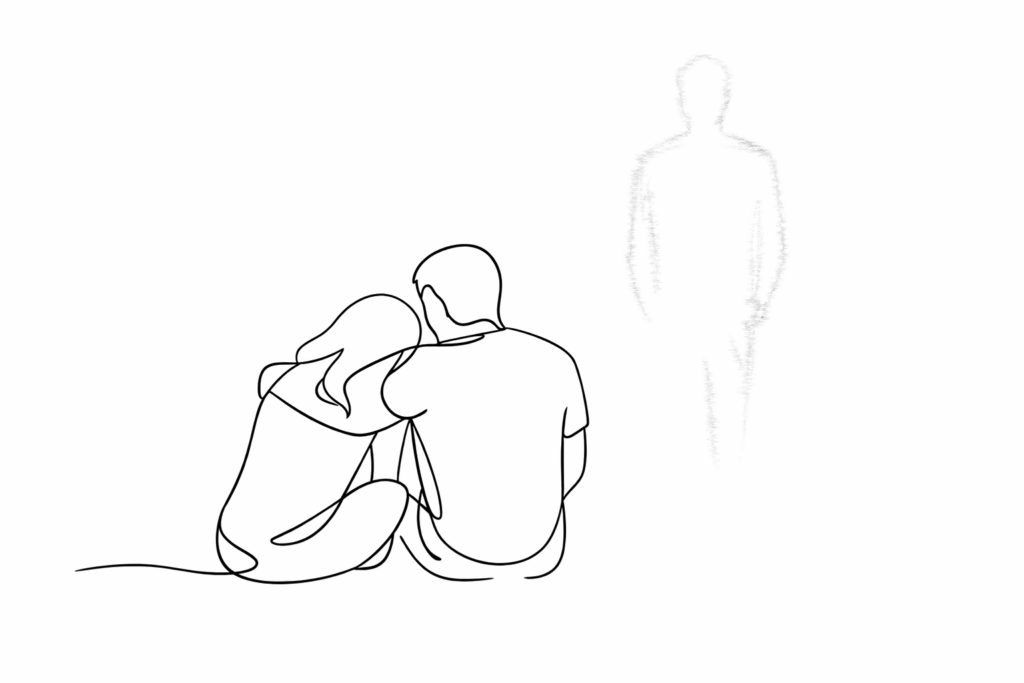
A relationship between the couple is believed to be very sacred and is meant to be the emotional zone of the couple. Though no third person should be allowed to enter this emotional zone, we often find a third person influencing the beautiful bond. This may not always be an extramarital interest or any other romantic interest, but may be just anyone, may be a parent, a friend, a colleague, work or may even be a memory, society, and not to be forgotten, filtered reel life influence in a person’s life.
The involvement of a third person may not be through intention but through emotions or through unmet physical or financial needs. Said or unsaid every couple has some emotional gaps over some or other points or has unmet need at some point and here the external influences become inevitable. Problem arises when external factors begin to occupy the emotional gaps or wander over or entering into the personal space of the couple.
Understanding the role of the third person and protecting the emotional and physical intimacy from these external factors is essential for a healthy relationship.
What do we mean by the “Third Person”?
Any external influence that consistently interferes with the physical or emotional space or even tries to interfere in this space, the connection of the couple or influences the decisions of the couple, may be termed as a “third person” in the relationship. This external factor may be just anyone from parents, friends, close family, memory or a partner, children, social media or work.
Entry of Third Person: How? When? Why?
The entry is very subtle or even unnoticed. It is rarely loud. And can be through multiple entry points like:
- When partners start looking for validation beyond their respective partners. It becomes an easy entry point for a third person. The reason to seek external validation may be anything: a toxic partner, unmet physical, emotional, or financial needs, work pressure, or, in some cases, the friend circle.
- The lack of communication may be because of the fear of misunderstanding, fear of conflict, fear of misjudgement, or may simply be because of over-involvement with third-person factors such as work, family, children, etc.
- Unmet physical, emotional or financial needs, especially in the world today, where materialistic things matter a lot and filtered reel life of social media influencers makes things worse.
Emotional Triangles
Psychologists often refer to the situation as emotional triangle. The situation as the say may prove to be a short term immediate relief measure for tension or stress between the two partners but in long term it has proved to create damage beyond complete repair.
The long term impacts may include:
- Reduced emotional intimacy
- Questionable and confusions in loyalty
- Misunderstandings
- Loss of trust
- Physical and Emotional withdrawal
- The partners are seen to stop or delay their response to each other
When Parents Act as a Third Person
Parental influence is one of the most common and sensitive forms of third-party influence between a couple and their relationship. It is something that has an emotional connection along with deep childhood memories. Without proper boundaries, the personal space of the couple can easily be invaded by the parents and influenced to the extent that the intimacy of the couple is affected. The personal decisions of the couples start getting filtered through the parents.
Both the couples and the parents should understand that marriage requires an emotional realignment, and the space that used to be closed with parents has to be shared with the spouse.
Spouse may feel invisible or secondary if this emotional shift is not understood or remains unshifted.
Friends and External Validation
There is a difference between friends and a partner. Friends offer support, and partners offer emotional support. When friends become the emotional substitutes, problems arise.
When a partner starts sharing intimate relationship details or consistently seeks advice over small or big issues of life, or sometimes starts comparing relationships with others, then we may mark the situation as alarming and can say that a friend is getting substituted as an emotional partners.
This creates emotional distance within the couple and misplaced loyalty.
Non-human Third Person
In cases, it can be seen that a non-human is becoming a third person between the couple. This non-human third person may be Work stress, mobile phones, social media, or just anything that keeps the partner constantly busy. The non-human third person can silently intrude into a relationship when emotional check-ins are neglected.
The relationship slowly loses depth, even without conflict.
When the Third Person Is a Past Wound
At times, it has been observed that a memory, a past wound, an unresolved attachment, or a fear of abandonment can get the upper hand over a partner and show up as emotional defensiveness, overdependence on others, or an inability to develop trust in the partner.
Healing becomes essential in such cases.
The Emotional Cost on the Partner
We all know every action has a reaction. When one partner tries to get involved with a third person in the relationship, the other partner gives a reaction. It’s completely normal and natural. But the reaction gives a lasting impact on the partner and the relationship. The partner may experience:
- Insecurity
- Emotional loneliness
- Self-doubt
- Resentment
- Emotional withdrawal
- Limited communication
Boundaries: The Key to Protection
By boundaries in a relationship, we mean guidelines. Healthy boundaries are seen to be important in a relationship for various factors. Particularly in third-person matters, certain healthy boundaries that are expected and respected are:
- Keeping a couple of matters within the couple
- Prioritising the partner’s feelings
- Limiting external influence on decisions
- Creating private emotional space
These boundaries help protect the intimacy and strengthen trust.
Reclaiming the Couple Space
Reclaiming the space requires acceptance, apologies and collective and conscious efforts to bring balance.
The goal of achievement can be achieved through honest communication, emotional and physical accountability, and re-prioritising each other as the central focus of the relationship.
Both partners should agree to reduce dependency on external validation, if any. Partners should understand that it is because of tis dependency the relationship and hence the partners are getting compromised.
Creating a Strong Emotional Unit
A healthy relationship balances and allows space for friends, family and loved ones, maintaining a strong core. The couple remains in the centre and maintains their individuality and independence as they share their emotional intimacy. There is a mutual respect for everyone without any emotional displacement.
Conclusion
Nobody intentionally introduces a third person in a relationship. Third person may often be a symptom of something that is missing between the couple. It’s often very silent, but its effects can be profound. Relationships thrive when emotional priority remains within the couple, and external influences are managed with awareness and boundaries.
A relationship, a commitment, is not about isolating from the world around. But it definitely needs some boundaries about protecting the personal space of the couple.
The best way to cherish a beautiful relationship is by choosing connection over convenience and clarity over comfort. The third person naturally loses power under such circumstances.