Daily Stress in the Life of a Man
Introduction
Stress is inevitable, we all know. It’s with everyone, be it a man or a woman, a couple or even a kid. Everyone has their own set of problems stressing them out on day to day basis.
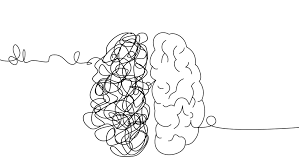
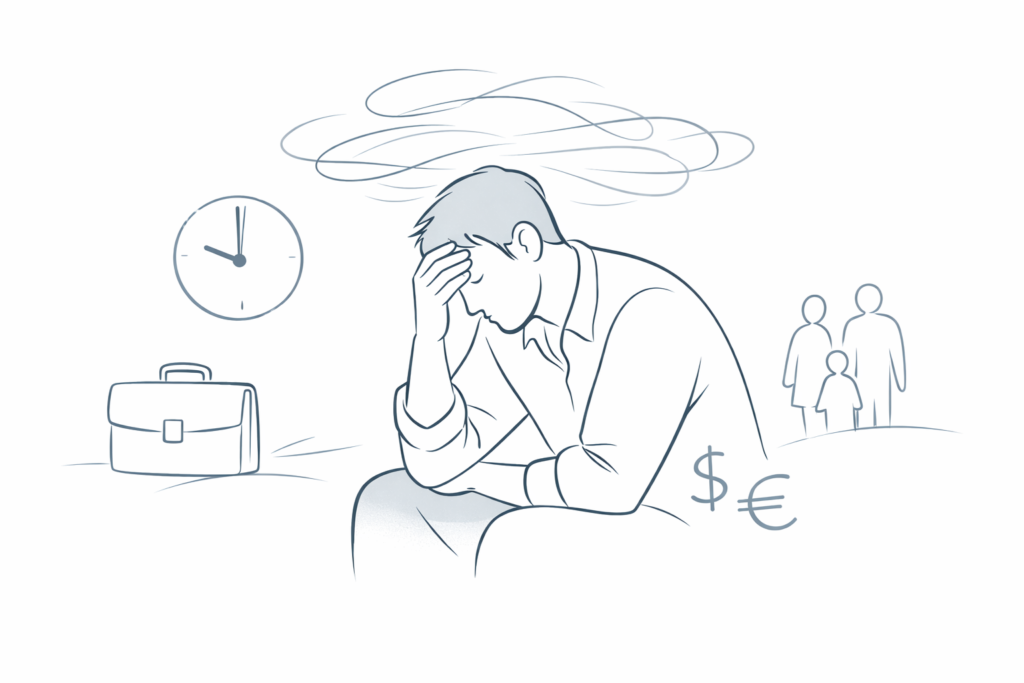
Here we discuss stress in a man’s life. The society demands that a man be strong, stable, and dependable, leaving no room for emotional expression or breakdown. Stress here becomes a constant companion that nobody thinks or talks about, and it often goes unnoticed.
Sources of Stress
There may be several sources of stress in a man’s life. Here, we try to name a few common sources
1. Financial stress
The most common reason for stress in a man’s life is the financial responsibilities of a man. The role of being a provider, the stress of keeping up with the social expectations, job security, keeping up with inflation, and career growth keep men preoccupied, inevitably in their minds.
2. Work stress
Society often judges a man by his success and achievements. The long working hours to prove himself at the workplace, the performance pressure, the peer competition and the fear of failure burn out a man’s peace of mind.
3. Emotional Suppression
Men, since birth, are taught to be strong and not to cry. And they are even sometimes trolled if seen crying, being said to be crying like a girl. They try to make men tough without realizing its human to have emotions. With all this, the emotions are simply suppressed, piling up, bringing in frustration.
4. Relationship Stress
Multiple roles played by man in different relationships, like being a good son, a good husband, a good friend, a good partner, a good father brings in stress for fear of not being able to prove himself in some role.
5. Social cause
Men also often have to take a lead as a mediator to bring peace and harmony in a relationship by bridging two individuals, sometimes even without any reason or emotional support. The added burden for a good social cause is sometimes a stress in a busy life schedule.
Fear of failure or failing to meet these ideals creates self-doubt and internal conflict.
6. Lack of Personal Time or Me time
Continuous work and no rest, changing roles between work, family, society, a man sometimes gets emotionally and physically overburdened and exhausted with work, and that leads to no self-time.
Common changes stress brings around in men
Stress is a silent partner, and often the effects of stress are not seen in words but can be observed in the person’s behaviour. Very frequently, the effects go unnoticed in daily life. And small changes over time have to be evaluated very carefully. Some of the most common changes that can be observed are:
1. Irritability and anger
An otherwise happy person who is burned out by the stress starts getting irritated by small things in daily life, and if the things or conditions get worse, then anger takes over.
2. Emotional withdrawal
A person who is full on the inside becomes emotionally unstable and starts feeling isolated from loved ones or society.
3. Sleep issues
The mind is never at rest, and overwork by the mind with continuous thoughts running in one’s mind about the things going around him makes things work not only when the person is awake but even when he tries to sleep, depriving the person of his sleep, which further deteriorates the conditions.
4. Anxiety and low motivation
Continuous thoughts and overthinking keep the mind preoccupied and anxious. Resulting in a lack of focus and failure in the completion of work. Which in return de motivates the person, bringing things to a further low.
5. Feeling unappreciated or misunderstood
A negative pattern, once started, aligns the things to negativity overall. A person who is unable to justify his results or is unable to perform his duties will be judged a failure. The society or loved ones often overlook the reasons for failure but misunderstand the person concerned, and the person may feel devalued or unappreciated, ultimately moving into depression.
Things here start going in a vicious circle where the aftereffects of stress become the stepping stone to further stress.
Stress management
Stress management is often not so easy, as the main cause of stress is hidden and cannot be easily judged by anyone. Still, if a proper procedure is followed, we may help an individual to lead a better life by overcoming stress.
1. Acknowledge the stress
To identify the same, you need to first accept the stress. It is not an act of weakness but an act of courage to accept stress.
2. Proper and open communication
Communication plays its own role in stress reduction. An open heart communication without any judgment with a trusted person or a professional helps in releasing the inner frustration and a possible suggestion to fight back.
3. Physical activity and movement
Physical body movement plays an important role in stress reduction. The body, in response to physical activity, releases endorphins that relieve the person of stress. Physical movement also helps in reducing stress hormones.
4. Realistic expectations
By putting up small goals with realistic expectations and achieving success with these small goals, a person becomes more confident to gradually fight back against bigger and difficult scenarios.
Conclusion
Daily stress in a man’s life is real, layered, and deeply emotional and the majority of the time it’s invisible. Recognising this stress is the first step toward healthier relationships, better emotional balance, and personal growth.
Men don’t need to carry everything alone; strength also lies in awareness and openness.