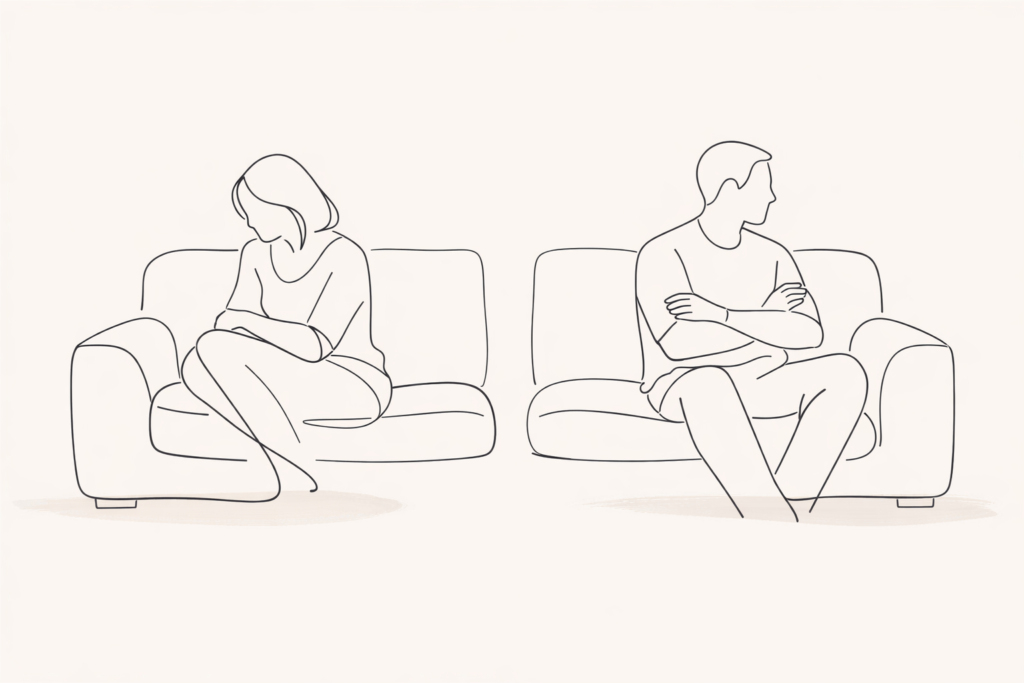
Married but Single: The Silent Loneliness Within Marriage
Introduction
Marriage is the beautiful union of two partners that is expected to lead towards a shared life and serve as a foundation for companionship. We can assume it to end loneliness.
But are our perceptions and assumptions about marriage true?
The real-world picture today very frequently makes us contradict and question our belief system. Very often, we come across people who are married but feel single.
What Does “Married but Single” Really Mean?
We will have to understand that “Married but single” is not a legal status. It’s an emotional state of a person.
Here, the partners share a home in which they coexist, but they do not share their emotions; they feel no connection or feel disconnected.
How Emotional Loneliness Develops in Marriage
Emotional loneliness is often very silent, and everything appears very normal until very late in a person’s life. But deep within, the person feels unseen, unheard, unsupported, and disconnected from their partner.
It is not always a result of conflicts and is rarely sudden in appearance. Numerous factors lead to this loneliness. To name a few:
- Poor communication between the partners
- Emotional distance or unavailability of the partners
- Unresolved issues of the past
- Workaholic nature of an individual, putting excessive focus on work
- Undue external responsibilities
- Lack of appreciation or validation
- Neglecting the emotional needs of the partner
Under these circumstances, something that initially started as an adjustment gradually leads to emotional distancing and isolation.
Emotional Distancing
To understand this, we must differentiate between the physical and emotional presence of an individual. Merely being physically present does not mean being emotionally present. A partner may be physically present but emotionally absent.
With physical presence, we share space. Emotional presence, however, connects individuals mentally and provides trust, safety, and vulnerability in a relationship.
Being physically present may help build a connection, but it does not guarantee emotional investment. A genuine connection is built through both physical and emotional presence.
Even conversations change depending upon the level of presence in a relationship. Conversations become more meaningful when partners are emotionally connected, while they remain practical, functional, and to the point when a partner is merely physically present.
Being together can start to feel like a responsibility when partners are not emotionally aligned, bringing in the feeling of being alone even with a partner.
Unspoken Expectations
Marriages often bring along unspoken expectations. If partners fail to understand or devote themselves to each other’s expectations, it silently creates space for emotional distancing.
Partners often expect:
- Emotional support for the day-to-day ups and downs of life
- Appreciation, which creates a feel-good factor and acts as motivation
- Validation, which brings trust and emotional safety—being a hand to hold, a shoulder to cry on, and an ear to listen without judgment
- Shared decision-making, which provides mental support and reassurance that they are not alone
- Shared responsibilities, which bring balance and a sense of teamwork in the relationship
Emotional Neglect
Neglect hurts in any relationship—especially from loved ones, where it can be heartbreaking.
When loved ones go emotionally invisible without any argument, drama, or valid justification, their absence can feel like betrayal. This can be extremely painful.
Not just the pain, but this absence can negatively impact a person’s individuality, creating self-doubt and questioning self-worth.
Social Acceptance
Once a person is tagged with the relationship status of being married, society often fails to acknowledge emotional loneliness, leaving no space for the person to express their emotions.
Society tends to judge, which can create a guilty environment for someone already in distress. The person may begin to withdraw emotionally. Gradually, the gap between outer appearances and inner reality widens.
This internal erosion of a person is often more damaging than a full-fledged conflict.
Dealing with Emotional Loneliness
There may be numerous reasons why a person continues to stay in an emotionally lonely marriage. Staying does not mean contentment; it may be a compromise made for children, family, or circumstances.
Some common reasons include:
- Children
- Social pressure
- Financial dependency
- Fear of change
- Hope that things will improve
Can This Loneliness Be Addressed?
Yes, but change requires effort from both sides, with honesty and willingness to make things work.
Healing begins with:
- Acknowledgment
- Communication
- Rebuilding emotional intimacy
- Setting healthy boundaries
- Spending quality time together
- Seeking support if needed
Choosing Yourself Without Guilt
Choosing yourself over chaos is never selfish. In fact, recognizing and accepting the reality is the first step toward healing.
Conclusion
“Married but single” is a quiet reality many live with but few speak about.
Emotional loneliness within marriage is real, valid, and deserving of attention. When emotional connection fades, it is not a personal failure, but a signal that something needs care, clarity, or change.