Tag: Emotional Health

  • The Usual Red Flags and Green Flags in a Relationship

    Red Flags Green Flags AG.OG..SunoG...

    The Usual Red Flags and Green Flags in a Relationship: What to Watch For and What to Nurture

    Introduction

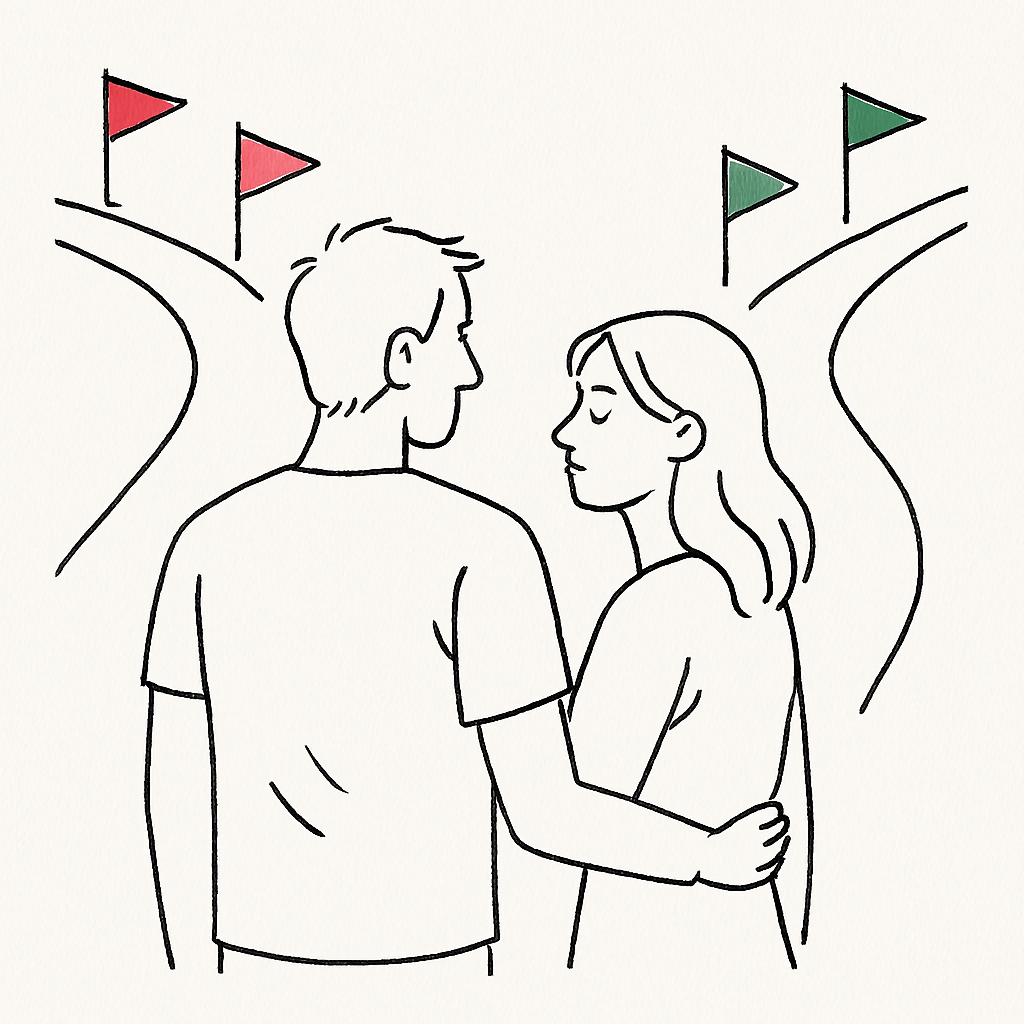
    The positives and the negatives of a relationship are usually metaphorized by the green and red flags in a relationship. It all depends on how the partners treat each other, and this forms the foundation to decide the longevity of a relationship.


    What Are Red Flags and Green Flags?

    Red flags are the warning signals indicating unhealthy patterns, risks and toxicity, while green flags on the other hand are the positive signals indicating respect, relationship readiness and emotional health.

    We all know and understand that no one is perfect and sometimes somewhere we all make mistakes. But the willingness to accept, learn, apologize, respect, rectify and grow is what matters the most in a relationship.


    Common Red Flags in a Relationship

    1. Avoidance and Poor Communication

    When the partners start avoiding each other or start avoiding proper communication it starts building stress and emotional distance in the relationship.

    2. Disrespect

    Self Respect is non negotiable. Disrespect erodes the emotional safety and self worth building stress and emotional distance between the couple.

    3. Accountability

    The failure of the any partner in a relationship, to take the responsibility for his or her actions and rather start a blame game indicates emotional immaturity giving birth to stress, insecurity and emotional distance.

    4. Dominance and Control

    It may be emotionally and mentally very satisfying to dominate and control our partners but the fact is dominance and Control not always represents care. It may be in any form be it the dressing style or time and pace for friends.

    5. Jealousy

    As we know that mild jealousy is inevitable and is actually healthy but constant suspicion reflects insecurity and lack of trust. Without trust no couple, no partner can survive a relationship.

    6. Inconsistent Behaviour

    Unpredictability, mixed signals or on and off situations bring emotional instability to any partner. The instability brings insecurities and emotional distance.

    7. Pushing the Limits or Boundaries

    Ignoring the limits even after a proper and clear communication is a major red flag. Be it emotional, physical or personal, healthy love respects limits.

    8. Manipulation

    Manipulation erodes the trust and transparency in a relationship. Manipulative behaviour becomes emotionally damaging as it makes you question your self reality, feelings or memory.

    9. Lack of Empathy

    Acts like dismissing the emotions, or showing little or no concern towards the partner brings emotional distancing in a relationship. Empathy is very essential for a emotional connection.

    10. Unhealthy or Fear-Based Attachment

    Constant fear of loss, constant feeling of guilt or consistent emotional pressure in a relationship indicates an unhealthy attachment. Unhealthy attachment is no way a source of happiness and stability in a relationship and eventually when the threshold gets triggered the relationship dies.


    Why Are Red Flags Often Ignored

    The excitement of being in a relationship or the initial priority of any couple is to develop chemistry to be in a relationship. The focus or excitement often super-seeds and intentionally or inadvertently makes the couple ignore the red flags.

    The couple may feel excited and feel some emotional attachment often hoping that the partner would change for better, but unfortunately it never happens.

    The fear of being alone or the social and family pressure makes a person commit to just anything that shows some signs of attachment without realizing or noticing the common red flags.


    The Common Green Flags

    1. Communication

    Partners feel at ease and are able to express themselves without the fear of judgement or retaliation. Even the difficult communications feel safe and no person feels threatened for anything.

    2. Emotional Safety

    Safety builds the intimacy. Partners feel accepted, heard and valued on a emotionally safe relationship. A partner can be his or her own self without fear.

    3. Consistency

    Consistency with actions and words showing signs of affection, respect, positive behaviour can create trust bringing the partners together.

    4. Respect

    Respecting each other’s individuality, opinions, boundaries, and life choices even during the dark phases of conflict and disagreements, display the act of mutual respect building trust and bringing the partners together.

    5. Conflict Resolution

    Managing conflicts and disagreements with calmness and empathy, focusing on a solution-oriented approach rather than a winning edge approach is a sign of emotional maturity that promotes growth and love as a couple.

    6. Accountability

    Partners who freely acknowledge their mistakes and don’t feel shame to apologise to each other for their mistakes open room for growth building love and emotional maturity ultimately giving a green flag to the partner.

    7. Support

    Partners who support each other accomplish goals in life, remove jealousy and insecurities from their relationship making room for mutual love, respect and growth.

    8. Transparency

    When the partners feel comfortable to keep the transparency about work, associations, finances etc in the relationship without feeling insecure or considering it as invasion of privacy, they bring peace and harmony earning trust and respect for each other.

    9. Emotional Maturity

    Partners who are emotionally mature can manage stress and disagreements very compassionately. They can even regulate the emotions bringing in emotional stability that deepens the bond and elongates the longevity of a relationship.

    10. Choice Not Obligation

    When the relationship is based on mutual acceptance by the partners and is free from guilt and pressures it feels like a choice. The acceptance increases relationship flourishes.


    Difference between the Red and the Green Flags

    Relationship flags are marked on the basis of partner behaviour and acceptance.
    A relationship based on values of trust, respect, clarity, transparency, emotional safety and accountability is usually marked as a green flag whereas a relationship based on fear, control, emotional instability, unnecessary blame is marked under the red category.


    Can Red Flags Turn into Green Flags?

    “Impossible” which by itself says “I’m possible”. So we can say everything is possible but only with consistent efforts, acceptance, awareness and accountability.


    Conclusion

    Love and healthy relationship should bring peace, growth, emotional safety and respect that should never be compromised. Understanding the red and green flags makes it easier to make good and healthy relationship choices.

  • रिश्ते में रेड फ्लैग और ग्रीन फ्लैग: क्या देखें और क्या अपनाएँ

    Red Flags Green Flags AG.OG..SunoG...

    रिश्ते में रेड फ्लैग और ग्रीन फ्लैग: क्या देखें और क्या अपनाएँ

    परिचय

    किसी भी रिश्ते के सकारात्मक और नकारात्मक पहलुओं को अक्सर ग्रीन फ्लैग और रेड फ्लैग के रूप में समझा जाता है। यह पूरी तरह इस बात पर निर्भर करता है कि पार्टनर एक-दूसरे के साथ कैसा व्यवहार करते हैं, और यही किसी रिश्ते की लंबी उम्र की नींव तय करता है।


    रेड फ्लैग और ग्रीन फ्लैग क्या होते हैं?

    रेड फ्लैग वे चेतावनी संकेत होते हैं जो अस्वस्थ पैटर्न, जोखिम और टॉक्सिसिटी को दर्शाते हैं, जबकि ग्रीन फ्लैग सम्मान, रिश्ते की तैयारी और भावनात्मक स्वास्थ्य को दर्शाते हैं।

    हम सभी जानते हैं कि कोई भी परफेक्ट नहीं होता और कभी न कभी हमसे गलतियाँ होती हैं। लेकिन गलती स्वीकार करना, सीखना, माफी माँगना, सम्मान देना, सुधार करना और साथ में आगे बढ़ना—यही किसी भी रिश्ते में सबसे ज़्यादा मायने रखता है।


    रिश्ते में आम रेड फ्लैग्स

    1. संवाद से बचना और खराब कम्युनिकेशन
      जब पार्टनर एक-दूसरे से बचने लगते हैं या सही तरीके से बात करना बंद कर देते हैं, तो रिश्ते में तनाव और भावनात्मक दूरी बढ़ने लगती है।
    2. अपमान
      आत्मसम्मान से समझौता नहीं किया जा सकता। अपमान भावनात्मक सुरक्षा और आत्म-मूल्य को खत्म कर देता है।
    3. जिम्मेदारी न लेना
      अपनी गलती की जिम्मेदारी न लेकर दूसरे पर दोष डालना भावनात्मक अपरिपक्वता को दर्शाता है।
    4. नियंत्रण और प्रभुत्व
      कपड़ों, दोस्तों या समय पर नियंत्रण रखना देखभाल नहीं बल्कि नियंत्रण का संकेत होता है।
    5. अत्यधिक जलन
      हल्की जलन सामान्य है, लेकिन लगातार शक असुरक्षा और अविश्वास को दर्शाता है।
    6. अस्थिर व्यवहार
      कभी पास, कभी दूर—इस तरह का व्यवहार भावनात्मक अस्थिरता लाता है।
    7. सीमाओं का उल्लंघन
      स्पष्ट संवाद के बाद भी सीमाओं को नजरअंदाज करना एक बड़ा रेड फ्लैग है।
    8. मैनिपुलेशन
      भावनात्मक चालबाज़ी रिश्ते में विश्वास और पारदर्शिता को खत्म कर देती है।
    9. सहानुभूति की कमी
      भावनाओं को नज़रअंदाज़ करना रिश्ते में दूरी बढ़ाता है।
    10. डर पर आधारित अस्वस्थ लगाव
      लगातार डर, अपराधबोध या दबाव अस्वस्थ अटैचमेंट को दर्शाता है।

    रेड फ्लैग्स को अक्सर नज़रअंदाज़ क्यों किया जाता है

    रिश्ते की शुरुआत में उत्साह और भावनात्मक जुड़ाव अक्सर रेड फ्लैग्स को छुपा देता है।
    अकेलेपन का डर और सामाजिक दबाव भी व्यक्ति को गलत रिश्ते में बाँध देता है।


    रिश्ते में आम ग्रीन फ्लैग्स

    1. खुला संवाद
    2. भावनात्मक सुरक्षा
    3. निरंतरता
    4. आपसी सम्मान
    5. स्वस्थ विवाद समाधान
    6. जिम्मेदारी स्वीकार करना
    7. सहयोग
    8. पारदर्शिता
    9. भावनात्मक परिपक्वता
    10. बाध्यता नहीं, चयन

    रेड फ्लैग और ग्रीन फ्लैग में अंतर

    भरोसा, सम्मान, स्पष्टता और भावनात्मक सुरक्षा पर आधारित रिश्ता ग्रीन फ्लैग होता है,
    जबकि डर, नियंत्रण और अस्थिरता पर आधारित रिश्ता रेड फ्लैग माना जाता है।


    क्या रेड फ्लैग ग्रीन फ्लैग बन सकते हैं?

    “Impossible” शब्द में ही “I’m possible” छिपा है।
    लेकिन बदलाव तभी संभव है जब जागरूकता, स्वीकार्यता और निरंतर प्रयास दोनों ओर से हों।


    निष्कर्ष

    प्यार और स्वस्थ रिश्ता शांति, विकास, भावनात्मक सुरक्षा और सम्मान लाता है। रेड और ग्रीन फ्लैग्स को समझकर सही और स्वस्थ रिश्ते चुने जा सकते हैं।

  • How to Build Weekly Family Traditions Everyone Enjoys

    weekly family traditions AG.OG..SunoG...

    How to Build Weekly Family Traditions Everyone Enjoys

    Introduction

    In today’s fast-paced world, everyone is busy managing personal and professional commitments while constantly navigating digital distractions. As a result, quality time with loved ones often gets pushed aside. Even while living under the same roof, family members may begin to feel emotionally disconnected.

    To maintain strong family bonds, it becomes essential to intentionally create regular family traditions. These traditions bring family members together, creating routines filled with connection, shared joy, precious moments, and a deep sense of belonging—something every family member deserves, expects, and looks forward to.

    Family traditions do not need to be fancy, expensive, or created for public display. Their true purpose is simply to create meaningful moments of togetherness within the family.

    Below are some practical and thoughtful ways to build weekly family traditions that everyone genuinely enjoys.


    1. Understand Your Family’s Unique Personality

    Every family is different, and so are individual likes and dislikes. Before deciding on a weekly family tradition, take time to reflect and discuss:

    • What is something everyone in the family enjoys doing together?
    • Which activities help the family relax the most?
    • What brings genuine smiles to everyone’s faces?
    • What feels natural and easy for the family to do together regularly?

    Answering such questions provides clarity and helps you choose a tradition that truly suits your family’s personality and lifestyle.


    2. Keep It Joyful, Not a Burden

    A family tradition should never feel like an obligation. It should be something each member looks forward to with excitement and happiness. Keep it simple, stress-free, and enjoyable for everyone.

    Simple traditions are easier to maintain, more sustainable over time, and often far more meaningful than elaborate plans.


    3. Fix a Day and Time

    Decide on a specific day and time every week and keep it consistent. A fixed schedule reduces last-minute excuses and helps everyone plan their routines around this shared time.

    Consistency builds discipline, and over time, the tradition naturally becomes an integral part of family life.


    4. Involve Everyone in Decision-Making

    Every family member should feel valued and heard. Involve everyone while planning the tradition by asking questions such as:

    • What kind of tradition would you like to build?
    • Which activities excite you the most?
    • What should we try first as a family?

    When everyone contributes ideas, it creates a sense of ownership and emotional investment.


    5. Rotate Roles and Responsibilities

    Encourage active participation by assigning small roles—planning, organizing, choosing activities, or leading discussions. Rotate these roles among family members.

    This rotation keeps the tradition lively and ensures that everyone remains engaged, interested, and emotionally connected over time.


    6. Avoid Force and Conflict

    Choose traditions that are enjoyable for all and free from contradictions or pressure. The goal is to strengthen emotional bonds and bring family members closer—not to create stress or resistance.

    Nothing meaningful grows when it is forced.


    7. Add a Personal Touch

    Small personal rituals can make a tradition truly special and memorable. For example:

    • Lighting a candle
    • Saying a family prayer
    • Taking a family photograph
    • Playing a simple game
    • Singing a song or sharing jokes led by one family member

    These little acts create a sense of magic, warmth, and belonging.


    8. Allow Flexibility and Growth

    Life is unpredictable, so allow room for flexibility. Create simple guidelines rather than rigid rules. If changes are needed, opt for postponing or swapping responsibilities instead of canceling altogether.

    Allowing traditions to evolve helps them grow along with changing needs, ages, and life situations—while keeping consistency intact.


    9. Add Meaning Through Learning or Social Causes

    Along with fun traditions, consider adding a monthly activity focused on learning or contributing to a social cause. This could include reading together, volunteering, or learning a new skill as a family.

    Such activities add depth, purpose, and shared values to your family traditions.


    10. Create a Family Tradition Journal

    Document your traditions by maintaining a family journal. Rotate the responsibility of writing among family members. Add photographs, memories, and reflections, while others contribute comments.

    This shared journaling becomes a beautiful record of togetherness and offers positive reinforcement for everyone involved.


    Conclusion

    Weekly family traditions are powerful tools for building connection, comfort, lasting memories, and a strong sense of belonging. Start small, stay consistent, and allow the tradition to grow naturally.

    Over time, your family will feel more united, happier, and emotionally closer than ever.

  • Mother vs Wife: A Man’s Perspective in Marriage

    Mother Vs Wife Ag.Pg.SunoG...

    Mother vs Wife: A Man’s Perspective in Marriage

    Introduction

    The biggest challenge in the life of a man is maintaining balance between two women—one is his mother and the other is his wife. Both women have kept the world aside for him, making him the priority of their lives. It is an emotional triangle rooted in love and attachment.

    These are two very important relationships, each holding a different emotional meaning. Both women have their own roles in his life. It is not about choosing one over the other, nor is it about being biased toward either one. The whole story is about deep love for both, just expressed in different ways.


    The Mother–Son Bond

    A mother is the first emotional connection for any individual on this planet. She is the birth giver, care giver, protector, nurturer, and guide. A mother stands as a strong wall for her child, protecting him through the thick and thin of life wherever she can. This mother–son bond is built with deep roots of dependence, sacrifice, and unconditional love.

    A mother shapes her son into who he is today, instilling values, habits, and emotional responses. Her presence represents familiarity and provides emotional security that a child always longs for to stand tall in this world.

    Though certain changes are natural and expected, this mother–son bond does not disappear with marriage. For a mother, this transition often feels like emotional displacement. For the son, it feels like standing between unconditional love, loyalty, and independence.


    The Wife’s Role

    A wife is not an extension of a man’s mother, nor is she a replacement. She is a partner introduced through a commitment called marriage and is expected to stand equal—emotionally, mentally, and practically.

    For a man, his wife becomes his primary emotional companion, a partner in his decisions, and a partner for both his present and his future.

    Both women have their own roles and influence in a man’s life. As a wife, she seeks emotional priority and partnership. As a mother, she expects emotional bonding, closeness, and continuity of influence. The challenge arises when these expectations clash, and the man, standing at the center, is expected to fulfill both without compromising either.


    Why the Conflict Is Often Misunderstood

    Nothing in this triangle is done intentionally. Conflicts arise due to unspoken expectations and insecurities.

    As the couple begins their life together and establishes boundaries for a healthy relationship, the mother may interpret these boundaries as rejection of her love, care, and emotional closeness.

    The wife, on the other hand, may interpret the emotional closeness between her husband and his mother as interference.

    A man often chooses silence, assuming it will bring peace and harmony. Deep within, he becomes emotionally exhausted—feeling guilty for prioritizing his wife and disloyal for setting boundaries with his mother. He feels pressured to act as a mediator rather than simply being a husband or a son. This internal conflict often goes unnoticed but deeply affects his emotional well-being.


    The Emotional Struggle of a Man in Between

    Two women—one on either side—pulling the man toward themselves divides him emotionally. He is not emotionally absent; he is emotionally divided. He struggles with the fear of hurting or disobeying his mother and the fear of disappointing his wife, while also being misunderstood by both.

    Men are often conditioned to suppress emotions. As a result, they may avoid confrontation, hoping situations will resolve themselves. Instead, this avoidance adds to the mess, leading to deeper resentment and misunderstanding.


    Understanding Emotional Priorities in Marriage

    Every stage of life defines its own priorities, and marriage is no exception. Marriage does not mean abandoning parents, but it does bring a shift that defines the marital relationship and lays the foundation of a man’s adult life.

    Along with being a caring and loving son, a man becomes a committed husband. His wife becomes an important part of his emotional decisions. This shift is essential to avoid unclear emotional priorities and confusion among the man, his mother, and his wife.


    The Importance of Boundaries

    Boundaries may feel emotionally difficult, but they are essential and not disrespectful. Both women are related to the man at the center, and both deserve their own space.

    Boundaries protect harmony in the marital relationship by reducing misunderstandings and defining respectful roles among the mother, son, and wife. A man who communicates boundaries with empathy and firmness prevents long-term emotional damage. Silence, on the other hand, allows conflicts to intensify quietly and resurface later when situations go beyond control.


    The Wife’s Need for Emotional Security

    Marriage brings significant changes in a woman’s life as well. Expectations of emotional companionship, partnership, and being a priority in her husband’s life are deeply internal. Feeling secondary or unheard creates insecurity.

    A man must understand his wife’s concerns. She is not attacking his mother; she is seeking emotional safety. Reassurance—given through clear boundaries—acknowledges her feelings, strengthens trust, and deepens marital connection.


    The Mother’s Need for Reassurance

    A man’s inclination toward his wife and the time he spends with her may feel like emotional loss to his mother. Letting go is difficult. It becomes the man’s responsibility to reassure his mother with love and respect, without compromising his marriage.

    Appropriate involvement, reassurance of her importance, and compassionate clarification of roles help replace defensiveness with understanding. Relationships heal rather than break when reassurance is present.


    Communication: The Man’s Most Important Role

    Communication is the most powerful tool in any relationship. It can make or break bonds. Addressing difficulties early brings resolution, while avoiding difficult conversations leads to frustration and deterioration.

    Healthy communication transforms a man from a passive participant into a responsible bridge between the two women. It involves expressing thoughts clearly, addressing issues early, avoiding blame, and focusing on solutions rather than emotional outbursts.

    By bridging the gap, the man can shift the dynamic from mother vs wife to mother and wife. Balance between the two strengthens the present and builds a healthy future while honoring both relationships.


    Conclusion

    The conflict between mother and wife is not a battle—it is a transition. A transition from being a son to being a husband, from dependency to partnership, and from emotional comfort to emotional responsibility.

    Marriage does not demand the removal of a mother from a man’s life. It requires clarity, boundaries, and emotional maturity. When a man honors both relationships without compromising either, the bond of marriage grows stronger and family harmony becomes possible.

  • Setting Healthy Boundaries While Dating Seriously

    Healthy Boundaries AG.OG..SunoG...

    Setting Healthy Boundaries While Dating Seriously

    Introduction

    As a relationship becomes deeper, so do the emotions, expectations, insecurities, and anxieties. This is natural—every evolving relationship goes through this phase. But without clarity and balance, these emotions can easily turn into dependency, misunderstandings, or emotional exhaustion.

    Healthy boundaries act like an invisible framework that protects respect, trust, and emotional safety. They allow partners to love freely without losing their individuality.


    What Do Healthy Boundaries in a Relationship Mean?

    Boundaries are limits—emotional, physical, mental, and even social—that define comfort zones between two individuals. In a relationship, boundaries protect self-respect, maintain individuality, and encourage honest communication. They prevent over-possessiveness and help maintain the right balance between “I,” “me,” and “us.”


    Why Boundaries Matter

    1. They define what’s acceptable and unacceptable, ensuring both partners feel valued and respected.
    2. They prevent emotional burnout by protecting inner peace and stopping the cycle of over-giving.
    3. They strengthen the bond, as mutual respect and self-control build trust.
    4. They preserve individuality, allowing space for personal goals, friendships, and growth.

    Types of Boundaries in a Serious Relationship

    1. Emotional Boundaries

    These ensure both partners can express themselves without fear of judgment. They prevent manipulation and unhealthy emotional dependency.

    2. Physical Boundaries

    They involve consent, comfort, personal space, and physical intimacy at a mutually comfortable pace.

    3. Digital Boundaries

    These protect privacy—no checking phones without permission, no controlling online behavior, and mindful social media sharing.

    4. Time Boundaries

    They balance personal time, work, social commitments, and couple time, preventing dependency or suffocation.

    5. Financial Boundaries

    Open and honest conversations about money avoid misunderstandings. They define spending habits, shared expenses, and transparency.

    6. Sexual Boundaries

    Intimacy should feel safe and respectful. Partners must honor each other’s pace, comfort, fantasies, dislikes, and readiness.


    How to Set Healthy Boundaries While Dating Seriously

    1. Start with Self-Clarity

    Ask yourself:

    • What makes me feel safe?
    • What makes me feel respected?
    • What drains me emotionally or physically?
    • What are my priorities in a relationship?
    • What are my non-negotiables?
    • What do I consider personal?

    The clearer you are about yourself, the healthier your boundaries will be.

    2. Communicate Clearly and Calmly

    State your boundaries with confidence—without hints or hesitations. Clear words reflect self-respect and help your partner understand your needs better.

    3. Respect Your Partner’s Boundaries Too

    Healthy boundaries go both ways. Be open, listen actively, and handle differences with maturity.

    4. Revisit and Adjust When Needed

    As relationships evolve, priorities change. Revisit your boundaries from time to time and adjust them as needed.

    5. Resolve Boundary Clashes with Openness

    If boundaries conflict, discuss them without ego. Find a middle ground—if it doesn’t compromise safety or self-respect.

    6. Stand Firm on Non-Negotiables

    Peace, safety, and self-respect are not up for compromise. If a partner repeatedly ignores boundaries, it signals deeper incompatibility.

    7. Use “I” Statements

    Words matter. Instead of blaming, express how you feel:

    • Not: “You always make me feel suffocated.”
    • Try: “I feel overwhelmed when I don’t get personal space.”

    “I-statements” turn conflict into constructive dialogue.


    When Boundaries Are Crossed

    Humans are imperfect—we all slip at times. Crossing boundaries can happen intentionally, accidentally, or under social pressure.

    If you feel your boundary was crossed:

    • Address it calmly and immediately.
    • If it was a misunderstanding, a respectful partner will listen and adjust.
    • If it happened due to external pressure, take it seriously and discuss the pattern.
    • Do not allow resentment to build.

    Repeated violations, disregard, or a pattern of pushing limits is a relationship red flag.


    The Balance Between Intimacy and Independence

    Healthy boundaries don’t create distance—they enhance closeness. They help partners retain individuality while staying connected.
    A strong relationship is not about dependency; it’s about two whole people choosing each other every day.


    Conclusion

    Setting healthy boundaries while dating seriously is an act of self-love and mutual respect. Boundaries don’t restrict your partner; they protect your emotional space. The best relationships are those where you remain you, while sharing life with someone who values and respects your individuality.

  • Meditation and Mindfulness Practices That Actually Work for Men

    stress relief men AG.OG..SunoG...

    Meditation and Mindfulness Practices That Actually Work for Men

    Introduction

    In today’s fast-paced world, competition, stress, and emotional fatigue have become extremely common. Many people—especially men—carry an invisible load of personal and professional responsibilities that takes a severe toll on their physical and emotional health.

    Meditation and mindfulness are proven practices for improving emotional wellbeing, but interestingly, men often hesitate to begin or stick to these practices. This blog explains why—and offers practical, simple techniques that actually work for men.


    How and Why Meditation Matters

    Research from Harvard and Stanford has shown that meditation helps:

    • Reduce stress hormones like cortisol
    • Enhance emotional stability
    • Lower blood pressure
    • Increase feelings of calm, clarity, and confidence
    • Improve focus, concentration, and decision-making

    In simple words: training your mind through meditation directly improves performance in both personal and professional life.


    Why Men Avoid Meditation

    Men often struggle to start or maintain meditation habits because:

    1. Busy Work Schedules

    Long working hours make consistent practice difficult.

    2. Social Conditioning & Ego

    Many men grow up believing meditation is “soft,” which clashes with the traditional image of being strong and unemotional.

    3. Slow Results & Impatience

    Men usually look for quick outcomes. Meditation’s gradual results can feel demotivating initially.

    4. Restlessness & Overthinking

    A quiet mind feels frustrating when emotional imbalance or overthinking is already high.

    5. Lack of Guidance

    Without proper guidance, meditation can feel confusing or abstract, leading men to drop the idea altogether.


    What We Actually Mean by Mindfulness

    Mindfulness means being fully present in the moment—aware of your thoughts, surroundings, and feelings without reacting impulsively.

    Men who practice mindfulness learn to pause, observe, and then respond. This builds long-term emotional control, reduces irritability, and sharpens focus—qualities essential for modern life.


    Types of Meditation That Actually Work for Men

    1. Breath Meditation (Best for Beginners)

    Simple and powerful.

    How to do it:

    • Sit comfortably, close your eyes, and breathe slowly through your nose.
    • Focus on your breath and the movement of your chest.
    • When the mind wanders (and it will), gently bring it back.

    Benefits: reduces stress, lowers cortisol, increases oxygen flow, improves focus and emotional stability—even in just 5 minutes a day.


    2. Body Scan Meditation (For Physical Tension)

    Perfect for men who carry stress in shoulders, neck, or lower back.

    How to do it:

    • Sit or lie down comfortably.
    • Take slow breaths.
    • Scan your body part by part, from toes upward.
    • Notice sensations without judgment.

    Benefits: reconnects you with your body and releases hidden tension.


    3. Walking Meditation (For Restless Minds & Active Men)

    Meditation doesn’t always require stillness.

    How to do it:

    • Walk slowly in a quiet space.
    • Feel each step, notice your breath, observe your surroundings.

    Benefits: keeps the body engaged while training the mind.


    4. Journaling Meditation (For Emotional Clarity)

    A simple 10-minute writing exercise.

    How to do it:

    • Write your thoughts freely—without filtering.
    • Then reflect: Why am I feeling this way? What triggered it?

    Benefits: clears mental clutter, processes emotions, reduces stress and self-criticism.


    5. Mini Mindful Breaks (Quick Stress Reset)

    Perfect between meetings or during heavy days.

    How to do it:

    • Close your eyes.
    • Take 3 slow breaths.
    • Relax your shoulders and release tension.

    Benefits: prevents mental overload, keeps you centered, improves clarity.


    6. Guided Meditation (Easiest to Start With)

    YouTube videos or mobile apps provide soothing voice instructions.

    Benefits: structured, beginner-friendly, improves sleep and reduces stress effectively.


    7. Gratitude Meditation (For Positivity & Confidence)

    A simple but powerful mindset shift.

    How to do it:

    • Close your eyes, breathe slowly.
    • Think genuinely about your accomplishments—big or small.

    Benefits: rewires the brain to notice positive experiences, reducing stress and improving life satisfaction.


    How Mindfulness Affects the Mind and Body

    Mindfulness creates measurable changes in the brain by:

    • Enhancing decision-making and focus
    • Reducing cortisol levels (stress hormone)
    • Improving sleep quality
    • Increasing daily energy
    • Stabilizing emotional and hormonal balance

    Common Challenges & Practical Solutions

    1. “I don’t have time.”

    Start with 5 minutes a day. Consistency matters more than duration.

    2. “I can’t stop overthinking.”

    That’s normal. The goal is not to eliminate thoughts but to notice them without reacting.

    3. “It feels weird or pointless.”

    Every new habit feels strange at first—like going to the gym. Stick to it for a few days. Even small changes in calmness will surprise you.


    Conclusion

    Start small and choose the method that suits your personality. When practiced consistently, meditation can transform stress into stability, distraction into focus, and pressure into peace.

    Make it a lifestyle habit—not a chore—and your mind will reward you in ways you can’t imagine.

  • How to Manage Expectations in an Unmarried Relationship

    managing expectations AG.OG..SunoG...

    How to Manage Expectations in an Unmarried Relationship

    Introduction

    Having expectations from your partner is natural. However, when expectations become too high, they can create serious challenges in any relationship. A relationship between two people requires time, energy, effort, and emotions to grow. Managing expectations becomes even more difficult in relationships without formal commitment.

    Unfulfilled expectations can lead to misunderstandings, disappointment, or emotional turmoil, ultimately affecting the quality of the bond. Therefore, balancing expectations realistically helps maintain harmony and emotional security.


    What Do We Mean by “Expectations in a Relationship”?

    Our silent beliefs, personal standards, past experiences, social influence, and ideas about how a partner should behave, treat us, express love, or communicate—all form expectations.

    It is human nature to expect, and it is perfectly normal.
    The real challenge begins when expectations cannot be fulfilled due to differences in communication styles, love languages, unrealistic standards, or lack of clarity. These gaps often lead to insecurity or emotional distance, especially in non-committed relationships where insecurity already has more space to grow.


    Common Expectations in Non-Committed Relationships

    1. Differences in understanding about commitment or exclusivity.
    2. Expectations about availability, communication, and possessiveness.
    3. Doubts about long-term stability, creating emotional pressure and insecurity.
    4. Self-centric behaviour, which often leads to emotional conflicts.
    5. Social validation—partners may or may not feel comfortable disclosing the relationship.
    6. Financial contribution to daily expenses, which may become a point of friction.

    Why and How Expectations Cause Conflict

    Cultural norms, social pressures, and gender roles shape how people view relationships. The problem is not the expectation itself—expecting is natural—but the lack of communication around it.

    When expectations remain unspoken or unclear, they lead to disappointment, resentment, self-doubt, or misaligned priorities. This disturbs the peace and harmony of the relationship.


    Managing Expectations in an Unmarried Relationship

    1. Communicate openly

    Honest conversations about needs, boundaries, hopes, future plans, and expectations build transparency. This helps avoid misunderstandings and gives clarity about emotional investment.

    2. Be honest and realistic with yourself

    Avoid creating illusions. Be truthful about what you want and expect, while setting aside insecurities. Realism lays the foundation for a healthy future.

    3. Avoid comparing your relationship with others

    Everyone has different perspectives, priorities, and goals. Comparison creates dissatisfaction and unrealistic pressure. Focus on your bond, your needs, and what works for both of you.

    4. Set healthy boundaries

    Healthy boundaries promote mutual respect. They protect emotional space and prevent unwanted triggers, no matter what type of relationship it is.

    5. Welcome flexibility

    Change is constant. Circumstances, priorities, and emotional needs evolve. Accepting change together allows the relationship to breathe and grow stronger.

    6. Practice active listening

    Understand your partner’s viewpoint without judgement. Listening with empathy helps identify the root of disagreements and turns conflicts into opportunities for growth.

    7. Focus on the present

    The past is gone, and the future is uncertain. Anxiety is common, especially in unmarried relationships. Focus on building a beautiful today—healthy actions today create a healthier tomorrow.

    8. Practice gratitude

    It’s human to want more, but gratitude brings peace. Be thankful for your partner, your journey, and the memories you are creating. Appreciate the imperfections—they make the bond real.

    9. Understand that managing expectations does not mean lowering standards

    It means understanding that your partner is human, with their own needs, desires, and flaws. Acceptance brings peace; rigidity brings pressure. Relationships thrive when both partners allow space for growth, individuality, and mistakes.


    What Happens When Expectations Remain Unmet?

    Sometimes unmet expectations reveal deeper incompatibility rather than a communication issue. This can lead to frustration, emotional exhaustion, or toxicity. Understanding the root cause and moving forward becomes essential. Life is too short to carry grudges—clarity is healthier than staying stuck.


    Conclusion

    Managing expectations in an unmarried relationship is an act of balance. It’s about harmonizing love and logic, dreams and reality, individuality and togetherness.

    When both partners put in effort and approach challenges with maturity, honesty, empathy, and acceptance, expectations become pathways toward a healthier, stronger bond.

    Relationships thrive on mutual growth, not pressure.

  • The Impact of Stress on Testosterone and Mood

    The Impact of Stress on Testosterone and Mood

    The Impact of Stress on Testosterone and Mood

    Introduction

    In today’s fast-paced world, stress has become a constant companion for almost everyone — whether it comes from personal responsibilities, professional challenges, or daily life pressures. Chronic or prolonged stress gradually drains both physical and emotional health. It also elevates cortisol — the stress hormone — and disrupts other essential hormones.

    One often-overlooked consequence of stress is its effect on the male reproductive hormone — testosterone.
    To understand this impact, it’s important to explore the connection between stress, testosterone, and mood, since testosterone not only governs male reproductive health but also plays a vital role in maintaining energy, confidence, and emotional stability.


    What Is Testosterone and Why It Matters

    Testosterone is a key hormone primarily produced in the testes in men and, to a lesser extent, in the ovaries and adrenal glands in women. It regulates:

    1. Sexual functioning and libido
    2. Muscle mass and physical strength
    3. Bone density
    4. Mental clarity, focus, and mood
    5. Energy levels
    6. Motivation

    When testosterone levels are balanced, men generally experience better mental focus, motivation, and emotional stability. However, a decline in testosterone can lead to noticeable changes in behavior, mood, and overall vitality.


    How Stress Affects Testosterone

    The human body has an in-built defense mechanism. When exposed to stress, it activates the “fight or flight” response through the hypothalamic-pituitary-adrenal (HPA) axis, releasing stress hormones like cortisol and adrenaline.

    While short-term stress responses can be beneficial, chronic stress keeps cortisol levels elevated — which suppresses testosterone production in several ways:

    1. Hormonal Prioritization and Balance
      When the body continuously releases cortisol, it prioritizes managing stress over other functions such as reproduction and muscle growth, reducing testosterone synthesis.
    2. Impact on the Pituitary Gland
      Persistently high cortisol sends a signal to the pituitary gland to reduce the release of luteinizing hormone (LH), which in turn slows down testosterone production in the testes.
    3. Sleep Disruption
      Stress often leads to an overactive mind and disturbed sleep patterns. Since most testosterone is produced during deep sleep, poor sleep quality directly lowers testosterone levels.
    4. Increased Inflammation
      Chronic stress promotes inflammation in the body, which disrupts the normal hormonal balance and contributes to fatigue, low energy, and mood changes.

    Testosterone and Its Effect on Mood

    Testosterone influences key neurotransmitters like dopamine and serotonin, which regulate emotional balance, happiness, and motivation.

    When testosterone levels drop, men may experience:

    1. Irritability and mood swings
    2. Lack of motivation or self-drive
    3. Persistent fatigue or burnout
    4. Loss of confidence
    5. Symptoms of anxiety or depression
    6. Decreased libido and satisfaction

    This creates a vicious cycle — stress increases cortisol, high cortisol lowers testosterone, and reduced testosterone further worsens mood and emotional resilience, feeding back into higher stress.


    Scientific Evidence and Studies

    • The Journal of Clinical Endocrinology & Metabolism found that men under prolonged psychological stress had significantly lower testosterone levels than those with lower stress exposure.
    • Harvard Health reports that cortisol acts as a natural testosterone suppressor; chronic stress leads to a steady decline in testosterone.
    • The American Journal of Men’s Health observed that men with low testosterone often reported higher rates of anxiety and depression.

    These studies make it clear that managing stress is essential — not only for emotional balance but also for maintaining hormonal health.


    Managing Stress and Supporting Testosterone

    Here are some effective ways to manage stress and naturally support testosterone production:

    1. Prioritize Sleep
      Aim for at least 7–8 hours of deep, restful sleep every night. Testosterone production peaks during deep sleep, making quality rest non-negotiable.
    2. Eat a Balanced, Nutrient-Rich Diet
      Include foods that support hormone balance:
      • Zinc-rich foods: eggs, nuts, seeds, and seafood
      • Healthy fats: olive oil, avocados, and fatty fish
      • Complex carbs: whole grains and vegetables
        Avoid processed foods and excess sugar, as they can elevate cortisol levels.
    3. Exercise Regularly
      Engage in strength training and high-intensity interval training (HIIT). These not only boost testosterone naturally but also reduce stress and improve mood.
    4. Manage Stress Mindfully
      Incorporate stress-relief habits like meditation, yoga, journaling, deep breathing, or spending time in nature. These help lower cortisol and bring emotional balance.
    5. Avoid Harmful Habits
      Smoking and excessive alcohol consumption can negatively affect testosterone production. Reducing or eliminating them supports hormone health.
    6. Stay Connected and Seek Support
      Sharing your thoughts and feelings with friends, family, or professionals can lighten emotional burdens and prevent stress from building up.

    When to Seek Medical Help

    If symptoms such as fatigue, irritability, or low libido persist despite lifestyle improvements, it may be time to consult a healthcare provider. A simple hormone test can help identify imbalances and guide further treatment.


    Conclusion

    Stress doesn’t just affect mental peace — it influences the body’s chemistry, energy, and confidence. Chronic stress can silently erode both hormonal and emotional balance. Elevated cortisol suppresses testosterone, creating a cycle of fatigue, anxiety, and low mood.

    By adopting a holistic lifestyle — including better sleep, nutrition, movement, and mindfulness — it’s possible to restore hormonal balance and reclaim emotional strength, even in today’s stressful world.