
Tag: couple growth

  • Difficult Times in a Marriage

    difficult times in marriage AG.OG..SunoG...

    Difficult Times in a Marriage: When Love Is Tested, Not Lost

    Introduction

    Every marriage encounters struggles and difficult times. They are inevitable. However, these moments do not signify the absence of love between partners. Instead, they are phases where love is tested—examined, reshaped, and ultimately strengthened.

    Difficult phases in a marital journey are often temporary, yet they can feel isolating, confusing, and emotionally draining. What allows couples to face and overcome such times is the bond of love, respect, and commitment they share. When partners choose to stand together, even the hardest moments become easier to navigate.


    What Do “Difficult Times” Really Look Like?

    Difficult times in a marriage are often accompanied by temporary emotional disconnection. This disconnection can be painful, frustrating, and sometimes dramatic. It may involve visible conflict, or it may arrive quietly without confrontation.

    These difficult phases may arise due to:

    • Misunderstandings
    • Miscommunication
    • Financial stress or burden
    • Disagreements
    • Health challenges
    • Family pressures
    • Loss of intimacy
    • Feeling unheard or unappreciated

    Frequent Challenges During Difficult Times

    When Communication Starts to Fade

    One of the earliest signs of trouble during difficult times is fading communication. Conversations shift from emotional and meaningful exchanges to functional and limited discussions. The playful energy between partners slowly disappears.

    Partners may talk to each other, but not with each other. Assumptions replace conversations, creating emotional distance and loneliness. Arguments take the place of understanding, fueled by inner frustration and resentment.

    Even when partners are physically together, they may feel disconnected, unsupported, and hesitant to be vulnerable. Fear of conflict and emotional exhaustion often leads to suppressed emotions.
    This phase hurts not just because of the challenges, but because of the loneliness within a relationship that was meant to offer comfort and safety.


    Unmet Expectations

    Every marriage carries expectations—some spoken, others unspoken. These may include unconditional love, being prioritized, emotional and physical availability, appreciation, shared responsibilities, respect, trust, and understanding.

    When these expectations remain unmet, disappointment slowly builds. Over time, this disappointment can quietly weaken emotional closeness if not addressed openly.


    The Never-Ending Conflict

    Conflict in marriage is natural and unavoidable. The problem arises when conflicts remain unresolved. Couples sometimes avoid addressing issues to escape arguments, but unresolved conflicts often reappear as emotional disengagement.

    Repeated arguments can lead to fatigue, defensiveness, loss of hope, and emotional withdrawal. Resolving issues with honesty and patience is far healthier than allowing them to linger.


    Intimacy and Connection Challenges

    Stress and the feeling of being misunderstood are common during difficult times. These emotions can create insecurity and a lack of emotional safety, which directly affects intimacy.

    When intimacy declines, partners may feel undesired and disconnected, further deepening emotional distance and weakening the bond they once shared.


    Overdependence or Over-Responsibility on One Partner

    Sometimes effort in a marriage becomes one-sided—or feels that way. In either case, open communication is essential. Practical discussions and mutual understanding can prevent prolonged discomfort.

    There are situations where both partners are willing to improve the relationship, yet differences in love languages still create feelings of loneliness. Acceptance and conscious effort can help bridge this gap.

    However, when one-sided effort becomes a reality, the imbalance can exhaust the more active partner, leading to resentment and feelings of being taken for granted. Without mutual effort, the true meaning of partnership begins to fade.


    The Emotional Toll of Difficult Times

    Prolonged difficulties can significantly impact mental and emotional well-being. Anxiety, depression, emotional breakdowns or numbness, and loss of self-worth may arise.

    These emotions often remain unspoken, creating isolation within the marriage. When emotional pain is not expressed or acknowledged, it silently grows stronger.


    Why Difficult Times Are Not a Failure

    Struggles and hardships are a natural part of any relationship. Struggle does not always indicate failure. In fact, couples who face challenges together often develop deeper bonds.

    Difficult phases reveal unresolved issues, unmet needs, and hidden expectations. Just as every night leads to a new morning, difficult times can open doors to growth and renewal when faced together.

    Marriage thrives when partners are willing to confront life’s challenges side by side.


    Navigating Difficult Times Together

    Honest conversations, active listening, emotional support, and taking responsibility for one’s actions create reassurance that no one is facing hardship alone.

    Validating each other’s feelings and offering guidance during tough moments strengthens trust, deepens connection, and reinforces the feeling of togetherness.


    Rebuilding Connection

    Small, consistent efforts made with intention can restore trust and emotional safety. Meaningful change does not always come from grand gestures.

    Spending quality time together, emotionally checking in, expressing appreciation, sharing daily responsibilities, and working toward common goals help rebuild connection and reaffirm commitment.


    When and How to Seek External Support

    Seeking external support is not a weakness; it is a reflection of commitment and care. Couple therapy, counseling, or professional guidance can provide a safe space to address conflicts constructively and preserve the relationship.


    Knowing When to Let Go

    Not all marriages survive difficult times. Mutual effort is essential to sustain a relationship. Persistent one-sided effort, lack of respect, and ongoing emotional harm may signal the need to choose separation in order to protect self-respect and emotional well-being.


    Growth Through Hardship

    When lessons are learned together, growth becomes inevitable. Just as sunlight follows the darkest night, struggle can bring new turning points in a relationship.

    Improved communication, deeper understanding, and renewed commitment often emerge when couples overcome challenges together.


    Conclusion

    Life is not a bed of roses—it is more like a garden with thorns. Difficult times in marriage push couples beyond surface-level connections, encouraging deeper emotional bonds and shaping partners into stronger, more resilient individuals.

    When couples choose empathy over ego and connection over avoidance, difficult times become chapters of growth. Facing storms together—holding the same umbrella, not standing as opponents—defines the true strength of a marriage.
  • The Usual Red Flags and Green Flags in a Relationship

    Red Flags Green Flags AG.OG..SunoG...

    The Usual Red Flags and Green Flags in a Relationship: What to Watch For and What to Nurture

    Introduction

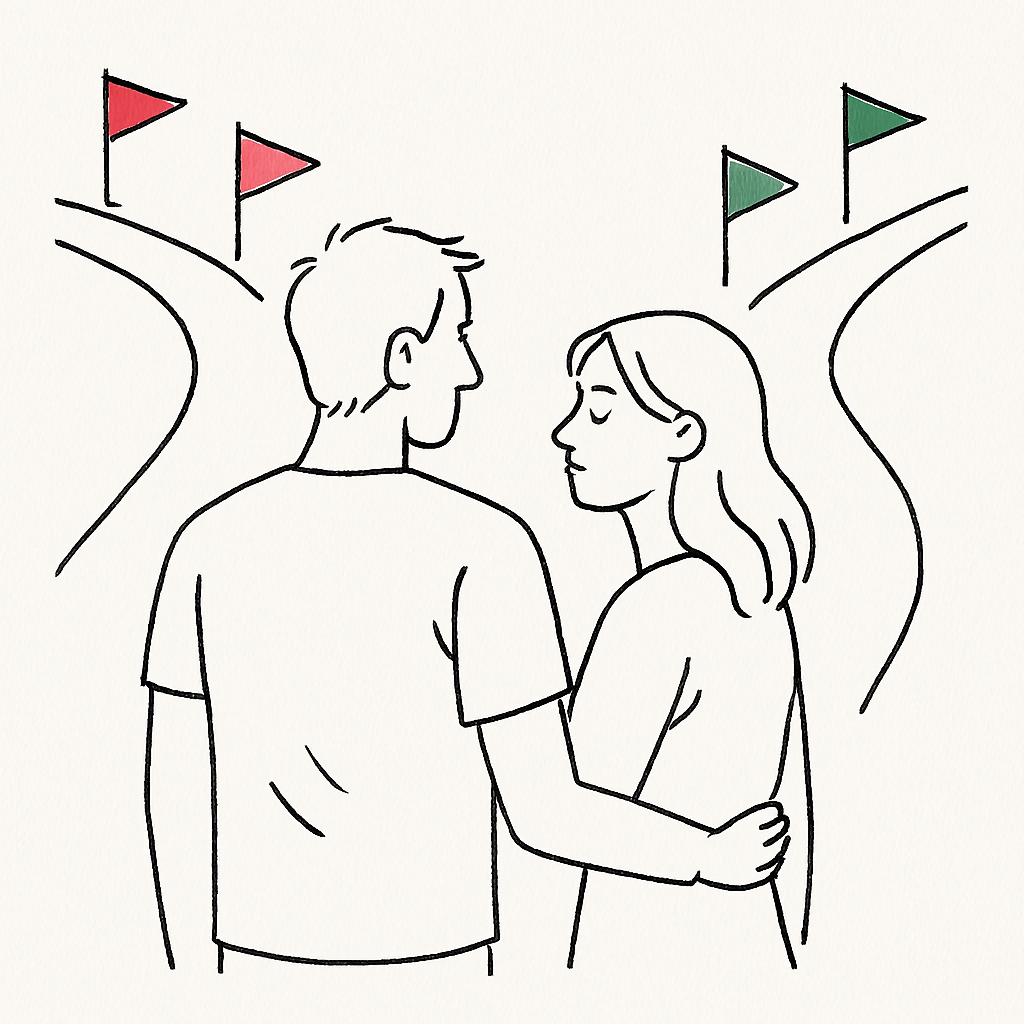
    The positives and the negatives of a relationship are usually metaphorized by the green and red flags in a relationship. It all depends on how the partners treat each other, and this forms the foundation to decide the longevity of a relationship.


    What Are Red Flags and Green Flags?

    Red flags are the warning signals indicating unhealthy patterns, risks and toxicity, while green flags on the other hand are the positive signals indicating respect, relationship readiness and emotional health.

    We all know and understand that no one is perfect and sometimes somewhere we all make mistakes. But the willingness to accept, learn, apologize, respect, rectify and grow is what matters the most in a relationship.


    Common Red Flags in a Relationship

    1. Avoidance and Poor Communication

    When the partners start avoiding each other or start avoiding proper communication it starts building stress and emotional distance in the relationship.

    2. Disrespect

    Self Respect is non negotiable. Disrespect erodes the emotional safety and self worth building stress and emotional distance between the couple.

    3. Accountability

    The failure of the any partner in a relationship, to take the responsibility for his or her actions and rather start a blame game indicates emotional immaturity giving birth to stress, insecurity and emotional distance.

    4. Dominance and Control

    It may be emotionally and mentally very satisfying to dominate and control our partners but the fact is dominance and Control not always represents care. It may be in any form be it the dressing style or time and pace for friends.

    5. Jealousy

    As we know that mild jealousy is inevitable and is actually healthy but constant suspicion reflects insecurity and lack of trust. Without trust no couple, no partner can survive a relationship.

    6. Inconsistent Behaviour

    Unpredictability, mixed signals or on and off situations bring emotional instability to any partner. The instability brings insecurities and emotional distance.

    7. Pushing the Limits or Boundaries

    Ignoring the limits even after a proper and clear communication is a major red flag. Be it emotional, physical or personal, healthy love respects limits.

    8. Manipulation

    Manipulation erodes the trust and transparency in a relationship. Manipulative behaviour becomes emotionally damaging as it makes you question your self reality, feelings or memory.

    9. Lack of Empathy

    Acts like dismissing the emotions, or showing little or no concern towards the partner brings emotional distancing in a relationship. Empathy is very essential for a emotional connection.

    10. Unhealthy or Fear-Based Attachment

    Constant fear of loss, constant feeling of guilt or consistent emotional pressure in a relationship indicates an unhealthy attachment. Unhealthy attachment is no way a source of happiness and stability in a relationship and eventually when the threshold gets triggered the relationship dies.


    Why Are Red Flags Often Ignored

    The excitement of being in a relationship or the initial priority of any couple is to develop chemistry to be in a relationship. The focus or excitement often super-seeds and intentionally or inadvertently makes the couple ignore the red flags.

    The couple may feel excited and feel some emotional attachment often hoping that the partner would change for better, but unfortunately it never happens.

    The fear of being alone or the social and family pressure makes a person commit to just anything that shows some signs of attachment without realizing or noticing the common red flags.


    The Common Green Flags

    1. Communication

    Partners feel at ease and are able to express themselves without the fear of judgement or retaliation. Even the difficult communications feel safe and no person feels threatened for anything.

    2. Emotional Safety

    Safety builds the intimacy. Partners feel accepted, heard and valued on a emotionally safe relationship. A partner can be his or her own self without fear.

    3. Consistency

    Consistency with actions and words showing signs of affection, respect, positive behaviour can create trust bringing the partners together.

    4. Respect

    Respecting each other’s individuality, opinions, boundaries, and life choices even during the dark phases of conflict and disagreements, display the act of mutual respect building trust and bringing the partners together.

    5. Conflict Resolution

    Managing conflicts and disagreements with calmness and empathy, focusing on a solution-oriented approach rather than a winning edge approach is a sign of emotional maturity that promotes growth and love as a couple.

    6. Accountability

    Partners who freely acknowledge their mistakes and don’t feel shame to apologise to each other for their mistakes open room for growth building love and emotional maturity ultimately giving a green flag to the partner.

    7. Support

    Partners who support each other accomplish goals in life, remove jealousy and insecurities from their relationship making room for mutual love, respect and growth.

    8. Transparency

    When the partners feel comfortable to keep the transparency about work, associations, finances etc in the relationship without feeling insecure or considering it as invasion of privacy, they bring peace and harmony earning trust and respect for each other.

    9. Emotional Maturity

    Partners who are emotionally mature can manage stress and disagreements very compassionately. They can even regulate the emotions bringing in emotional stability that deepens the bond and elongates the longevity of a relationship.

    10. Choice Not Obligation

    When the relationship is based on mutual acceptance by the partners and is free from guilt and pressures it feels like a choice. The acceptance increases relationship flourishes.


    Difference between the Red and the Green Flags

    Relationship flags are marked on the basis of partner behaviour and acceptance.
    A relationship based on values of trust, respect, clarity, transparency, emotional safety and accountability is usually marked as a green flag whereas a relationship based on fear, control, emotional instability, unnecessary blame is marked under the red category.


    Can Red Flags Turn into Green Flags?

    “Impossible” which by itself says “I’m possible”. So we can say everything is possible but only with consistent efforts, acceptance, awareness and accountability.


    Conclusion

    Love and healthy relationship should bring peace, growth, emotional safety and respect that should never be compromised. Understanding the red and green flags makes it easier to make good and healthy relationship choices.

  • रिश्ते में रेड फ्लैग और ग्रीन फ्लैग: क्या देखें और क्या अपनाएँ

    Red Flags Green Flags AG.OG..SunoG...

    रिश्ते में रेड फ्लैग और ग्रीन फ्लैग: क्या देखें और क्या अपनाएँ

    परिचय

    किसी भी रिश्ते के सकारात्मक और नकारात्मक पहलुओं को अक्सर ग्रीन फ्लैग और रेड फ्लैग के रूप में समझा जाता है। यह पूरी तरह इस बात पर निर्भर करता है कि पार्टनर एक-दूसरे के साथ कैसा व्यवहार करते हैं, और यही किसी रिश्ते की लंबी उम्र की नींव तय करता है।


    रेड फ्लैग और ग्रीन फ्लैग क्या होते हैं?

    रेड फ्लैग वे चेतावनी संकेत होते हैं जो अस्वस्थ पैटर्न, जोखिम और टॉक्सिसिटी को दर्शाते हैं, जबकि ग्रीन फ्लैग सम्मान, रिश्ते की तैयारी और भावनात्मक स्वास्थ्य को दर्शाते हैं।

    हम सभी जानते हैं कि कोई भी परफेक्ट नहीं होता और कभी न कभी हमसे गलतियाँ होती हैं। लेकिन गलती स्वीकार करना, सीखना, माफी माँगना, सम्मान देना, सुधार करना और साथ में आगे बढ़ना—यही किसी भी रिश्ते में सबसे ज़्यादा मायने रखता है।


    रिश्ते में आम रेड फ्लैग्स

    1. संवाद से बचना और खराब कम्युनिकेशन
      जब पार्टनर एक-दूसरे से बचने लगते हैं या सही तरीके से बात करना बंद कर देते हैं, तो रिश्ते में तनाव और भावनात्मक दूरी बढ़ने लगती है।
    2. अपमान
      आत्मसम्मान से समझौता नहीं किया जा सकता। अपमान भावनात्मक सुरक्षा और आत्म-मूल्य को खत्म कर देता है।
    3. जिम्मेदारी न लेना
      अपनी गलती की जिम्मेदारी न लेकर दूसरे पर दोष डालना भावनात्मक अपरिपक्वता को दर्शाता है।
    4. नियंत्रण और प्रभुत्व
      कपड़ों, दोस्तों या समय पर नियंत्रण रखना देखभाल नहीं बल्कि नियंत्रण का संकेत होता है।
    5. अत्यधिक जलन
      हल्की जलन सामान्य है, लेकिन लगातार शक असुरक्षा और अविश्वास को दर्शाता है।
    6. अस्थिर व्यवहार
      कभी पास, कभी दूर—इस तरह का व्यवहार भावनात्मक अस्थिरता लाता है।
    7. सीमाओं का उल्लंघन
      स्पष्ट संवाद के बाद भी सीमाओं को नजरअंदाज करना एक बड़ा रेड फ्लैग है।
    8. मैनिपुलेशन
      भावनात्मक चालबाज़ी रिश्ते में विश्वास और पारदर्शिता को खत्म कर देती है।
    9. सहानुभूति की कमी
      भावनाओं को नज़रअंदाज़ करना रिश्ते में दूरी बढ़ाता है।
    10. डर पर आधारित अस्वस्थ लगाव
      लगातार डर, अपराधबोध या दबाव अस्वस्थ अटैचमेंट को दर्शाता है।

    रेड फ्लैग्स को अक्सर नज़रअंदाज़ क्यों किया जाता है

    रिश्ते की शुरुआत में उत्साह और भावनात्मक जुड़ाव अक्सर रेड फ्लैग्स को छुपा देता है।
    अकेलेपन का डर और सामाजिक दबाव भी व्यक्ति को गलत रिश्ते में बाँध देता है।


    रिश्ते में आम ग्रीन फ्लैग्स

    1. खुला संवाद
    2. भावनात्मक सुरक्षा
    3. निरंतरता
    4. आपसी सम्मान
    5. स्वस्थ विवाद समाधान
    6. जिम्मेदारी स्वीकार करना
    7. सहयोग
    8. पारदर्शिता
    9. भावनात्मक परिपक्वता
    10. बाध्यता नहीं, चयन

    रेड फ्लैग और ग्रीन फ्लैग में अंतर

    भरोसा, सम्मान, स्पष्टता और भावनात्मक सुरक्षा पर आधारित रिश्ता ग्रीन फ्लैग होता है,
    जबकि डर, नियंत्रण और अस्थिरता पर आधारित रिश्ता रेड फ्लैग माना जाता है।


    क्या रेड फ्लैग ग्रीन फ्लैग बन सकते हैं?

    “Impossible” शब्द में ही “I’m possible” छिपा है।
    लेकिन बदलाव तभी संभव है जब जागरूकता, स्वीकार्यता और निरंतर प्रयास दोनों ओर से हों।


    निष्कर्ष

    प्यार और स्वस्थ रिश्ता शांति, विकास, भावनात्मक सुरक्षा और सम्मान लाता है। रेड और ग्रीन फ्लैग्स को समझकर सही और स्वस्थ रिश्ते चुने जा सकते हैं।